Category Archives: IT Jobs Buffalo

The Significance of Submitting Your Resignation Properly

Welcome back to another edition of the ComputerPeople Staffing blog! In the professional world, transitions are inevitable. Whether it’s a new job opportunity, a career change, or personal reasons, leaving a job is a common experience. One of the most important steps in this process is giving your employer a two-week notice. This standard practice is crucial for several reasons, and deviating from it—either by giving more or less notice—can have significant implications.

Why Two Weeks?

The two-week notice period has become a widely accepted norm in many industries, especially in the IT industry. It provides a balance between giving your employer enough time to find a replacement or redistribute your responsibilities, and allowing you to transition smoothly to your next chapter. Here are a few key reasons why this period is so important:

  • Professional Courtesy: Giving two weeks’ notice shows respect for your employer and colleagues. It acknowledges that your departure will have an impact and provides them with time to adjust.
  • Maintaining Relationships: The professional world is surprisingly small, especially in cities like Buffalo. Future opportunities often arise through networks and references. Leaving on good terms can preserve positive relationships that might benefit you later.
  • Smoother Transition: Two weeks gives both you and your employer time to ensure a smooth handover of your responsibilities. This can include training your replacement, completing ongoing projects, or documenting your tasks.
  • Protecting Your Reputation: Your professional reputation is one of your most valuable assets. Leaving abruptly or giving too much notice can negatively affect how future employers perceive you.

The Pitfalls of Giving Less Than Two Weeks’ Notice

While it might be tempting to leave immediately or give only a few days’ notice, doing so can have several negative consequences:

  • Burning Bridges: Leaving with short notice can frustrate and inconvenience your employer and colleagues, potentially damaging your professional relationships.
  • Legal and Contractual Obligations: Some employment contracts stipulate a notice period. Failing to comply can result in legal issues or loss of benefits.
  • Negative References: Employers may view a hasty departure as unprofessional, which can lead to unfavorable references that impact your future job prospects.
  • Unfinished Business: Leaving too soon might leave important projects incomplete or colleagues unprepared to take over your duties, reflecting poorly on your work ethic.

The Drawbacks of Giving More Than Two Weeks’ Notice

While more notice might seem courteous, it can also present challenges:

  • Awkward Work Environment: Knowing you’re leaving can create an uncomfortable atmosphere. Colleagues might treat you differently, and you might feel disconnected from ongoing work.
  • Productivity Decline: Employers might not assign new tasks to you, anticipating your departure. This can lead to a decline in productivity and job satisfaction.
  • Potential for Resentment: If your employer is unable to find a replacement quickly, a longer notice period can lead to frustration and resentment on both sides.

How to Give Your Two-Week Notice

When the time comes to resign, it’s important to do so professionally. Here are some steps to follow:

  • Write a Formal Letter: Draft a concise, polite resignation letter stating your intention to leave and your last working day. Express gratitude for the opportunity and experiences gained.
  • Speak to Your Supervisor/Manager: Schedule a meeting with your supervisor to deliver the news in person. This shows respect and allows for a direct conversation about the transition.
  • Be Prepared for Reactions: Your employer might try to persuade you to stay or express disappointment. Stay firm but respectful in your decision.
  • Offer Assistance: Show your commitment to a smooth transition by offering to help train your replacement or complete key projects before you leave.
  • Stay Professional: Continue to perform your duties to the best of your ability during the notice period. Leaving on a high note will reinforce your professional reputation.

In conclusion, giving a two-week notice is more than just a formality; it’s a crucial aspect of professional etiquette that benefits both you and your employer. By adhering to this practice, you demonstrate respect, protect your reputation, and ensure a smoother transition for everyone involved. Remember, the way you leave a job can be just as important as the way you start one. So, when the time comes, give your notice thoughtfully and professionally.

_____________________________________________________________________________________________

Thanks for reading! If you are a business looking to fill your important IT roles, visit us at cpstaffing.com to learn more!

If you are a candidate and are looking for dream role, visit us at jobs.cpstaffing.com for our latest job postings!

And don’t forget to follow us on LinkedIn for new jobs, insights, blog posts and more! https://www.linkedin.com/company/computerpeoplestaffing

Written by Jeff Weiss

The Importance of Proactive Succession Planning in Future-Proofing Your Company

Welcome back to another edition of the ComputerPeople Staffing blog! In today’s rapidly evolving business landscape, ensuring the long-term success and sustainability of your organization is more critical than ever. Succession planning is a key strategy to achieve this, providing a roadmap for the seamless transition of leadership and essential roles. It addresses fundamental questions such as who will be retiring, how to replace them, and the risks associated with not having a succession plan in place. Proactive succession planning is essential to future-proof your company against unforeseen challenges and maintain operational continuity.

The Need for Succession Planning

The demographic shifts, particularly the impending retirement of baby boomers, make succession planning a pressing concern. As a significant portion of the workforce approaches retirement age, companies face the risk of losing experienced and knowledgeable employees. Without a plan, the unexpected departure of key personnel can lead to substantial knowledge loss, decreased morale, and significant disruptions in business operations. Succession planning mitigates these risks by preparing the organization for seamless transitions.

Benefits of Proactive Succession Planning

A well-thought-out succession plan offers numerous benefits. It ensures smoother transitions and reduces downtime, maintaining business continuity. Proactive planning also improves employee engagement by fostering a culture of talent development and retention. Employees are more likely to stay with an organization that invests in their growth and provides clear career advancement opportunities. Succession planning also helps in identifying and nurturing future leaders, ensuring the organization remains competitive and resilient.

7 Factors to Consider in Succession Planning

Identifying Key Positions

Determine which roles are critical to the organization’s success and require succession planning. These positions often include senior leadership roles and other key operational roles that are vital to business continuity.

Assessing Talent

Evaluate the skills, experiences, and potential for advancement of current employees. This assessment helps in identifying individuals who are well-suited to take on larger responsibilities in the future.

Training and Development

Provide ongoing training and development opportunities to prepare potential successors for future roles. Investing in employee development ensures that they are ready to step into critical positions when needed.

Knowledge Transfer

Implement strategies for transferring critical knowledge from outgoing leaders to successors. This can include mentorship programs, documentation of processes, and shadowing opportunities.

Internal vs. External Succession

Consider whether to promote from within or recruit externally. Internal promotions can boost morale and retain institutional knowledge, while external hires can bring fresh perspectives and skills. Weigh the pros and cons of each approach to determine the best fit for your organization.

Timeline and Contingency Planning

Establish a timeline for succession planning activities and develop contingency plans for unexpected events. A clear timeline ensures that succession planning is proactive rather than reactive, and contingency plans provide a safety net for unforeseen circumstances.

The Cost of Not Investing in Succession Planning

Neglecting succession planning can lead to increased recruitment costs, decreased productivity, and the loss of institutional knowledge. Companies that fail to plan for leadership transitions often face operational disruptions and a decline in employee morale. Real-world examples abound of organizations that have suffered due to inadequate succession planning, underscoring the importance of being proactive.

4 Steps to Build an Effective Succession Plan

Start Early

Begin succession planning well in advance to allow sufficient time for talent development and transition. Early planning ensures that potential successors are adequately prepared for their future roles.

Engage Leadership

Gain buy-in from senior leadership and involve them in the succession planning process. Leadership support is crucial for the successful implementation of succession plans.

Communicate Transparently

Keep employees informed about succession planning initiatives and their role in the process. Transparent communication fosters trust and ensures that employees understand the importance of succession planning.

Monitor and Adjust

Continuously monitor the effectiveness of the succession plan and make adjustments as needed to adapt to changing circumstances. Regular reviews and updates ensure that the plan remains relevant and effective.

Conclusion

Proactive succession planning is vital for ensuring business continuity and long-term success. By starting early, engaging leadership, and communicating transparently, organizations can mitigate risks and prepare for the future. Don’t wait until it’s too late—begin your succession planning today to secure the future of your company!

If you need assistance with developing your succession plan, our IT staffing agency is here to help. Contact us to learn more about our services and how we can support you in creating an effective succession strategy tailored to your organization’s needs.

_____________________________________________________________________________________________

Thanks for reading! If you are a business looking to fill your important IT roles, visit us at cpstaffing.com to learn more!

If you are a candidate and are looking for dream role, visit us at jobs.cpstaffing.com for our latest job postings!

And don’t forget to follow us on LinkedIn for new jobs, insights, blog posts and more! https://www.linkedin.com/company/computerpeoplestaffing

Written by Jeff Weiss

Reminder: ComputerPeople will be on-sight at Mercy Flight 7/22!

ComputerPeople Staffing will be on-site at Mercy Flight’s Open House on July 22nd from 1:00pm-5:00pm. Come join us!

Check out Mercy Flight’s Headquarters and see their helicopters, get a firehouse tour, have a BBQ chicken dinner and much more! Hope to see you there!


No automatic alt text available.

Employee Spotlight: Marilyn Seitz

If you have been to our main ComputerPeople office, you probably know Marilyn.  She has been a part of our team for four years and she is always willing to help out wherever she is needed. Currently, Marilyn is our main receptionist, but she also serves as an accounting assistant, data entry extraordinaire, and provides assistance with HR filings and marketing/sales assistance. Marilyn is also a force to be reckoned with on the golf course – she plays multiple times every week! We sat down with Marilyn to find out a little bit more about her and her view of ComputerPeople, and here is what she had to say.

What sets ComputerPeople apart in the recruiting/business world?

What sets us apart is how important it is to us that we find the right candidate for a job. We spend a lot of time searching and following up with candidates to ensure a perfect fit. Also, everyone on our staff takes pride in their work and goes beyond the call of duty. The goal is always to do a great job instead of doing “a job” that is expected.

What is your favorite office tradition at ComputerPeople?

It would have to be Christmas and birthdays. Around Christmas time, we gather as an office for a meal, gift exchange, and to spend time together. It is always a lot of fun! For Birthdays, we celebrate by bringing in a cake/dessert and taking time out of our work day to spend time together.

What is something most people probably do not know about ComputerPeople?

I don’t think people realize how much time and effort is put into finding the correct candidate and following up to make sure everyone is on the same page.

What is something most people probably don’t know about you?

I volunteer at Millard Suburban Hospital in the Pre Administrative office and love it!!!

Thanks for all you do, Marilyn! You are an amazing addition to the ComputerPeople team!

Written by Kaitlyn Gahagen

How to increase your happiness at work without getting a new job.

Most full time employees work around 40 hours a week. For some, this time goes by quickly and it doesn’t feel like work at all. However, a recent Forbes Article divulged that about 70% of Americans are to some degree unhappy during the 40 hours a week that they spend at the workplace.  Are you one of them? While the obvious answer may be to find another job, we believe that there are a few things that you can do to really improve your happiness at the workplace.

GET ENGAGED. Studies have shown that employees who jump into the work environment, interact with those around them, and really get to know their products are much happier at work. Go to work functions after hours, participate, and get to know the people in the break room.

STAY ACTIVE. Although it may be sometimes necessary to stay at your desk most of the day, employees who keep physically active are overall much happier than those that do not. Go for short walks, stretch, and maybe even get some exercise during your lunch break if you have the opportunity.

BE COMFORTABLE. Talk to your employers about maintaining a comfortable thermostat (between 65 and 70 degrees), reducing noise, and utilizing adjustable chairs and desks. If you are uncomfortable, you are not going to be able to set yourself up for happiness at work.

In short, if you are really unhappy with the work that you do or the company that employees you, you may need to start looking for other options. But, there are a lot of unconscious factors that could lead to increased job satisfaction that you may not even realize. If the opportunity is there, you should always get engaged in office activities, move around, and maintain a comfortable workspace.

Written by Kaitlyn Gahagen

Creating A Resume From a Template? Read this First.

Resume templates are amazing tools. They allow candidates to create stunning resumes in a short amount of time. They are usually easy to read, cover all the details, and look very professional. However, if you use a template resume, there are a couple of mistakes that are easy to make. Read on to find out some of the most commonly made mistakes when using a template resume and how to avoid them.

Not filling in all of the sections. This seems so simple, but you would be surprised how often we see things like [company name here], [more detail about your role here], and [add your reference here]. Recruiters and hiring managers usually take about 30 seconds or less to review a resume, but that is an extremely noticeable mistake that will ALWAYS be caught. Employers want to know that you have attention to detail, and this is a quick way to get yourself dismissed from the candidate search. You can avoid this my reading over every word of your resume out loud before you submit. When you read out loud, your brain cannot skip over things and you will catch the mistake. We also recommend having one of our recruiters or a trusted friend read over your resume before you submit it.

Not listing all of your experience. Just because your resume template only has three sections of prior experience does not mean you should only list three sections of prior experience. It is definitely okay to break the mold of the resume template if you have extra sections to add. Also, don’t forget to add things like relevant skills or experience if that information would be applicable to the job. You can avoid this by brainstorming all of your experience and skills into an unformatted “master resume.” When you apply to a new job, make sure to highlight the most relevant things from your “master resume,” and do not include the things that are not relevant. You never want to lie or exaggerate on your resume, but it is definitely a great idea to tailor your resume to the job.

Not fixing your spacing. You should do everything you can to try and keep your resume down to one page, especially if you do not have a lot of experience. If you absolutely have to go on to two or three pages then that is okay, but do everything you can with spacing and margins to reduce the amount of pages in your resume before you submit. Your first priority should be that your resume is easily readable, but you also want to keep it as short as possible while still including details about your skillset and experiences.

Is your resume based on a template? Comment back with the mistakes that you caught or lessons that you learned!


Written by Kaitlyn Gahagen 

Employee Spotlight: Vicki Leavens

If you have ever worked with us at ComputerPeople staffing, you probably know Vicki Leavens.
 
Vicki has been a part of our team for over 34 years in the roles of Administrative Assistant,  Office Administrator, Office Manager, and Accounting Manager.  Though her roles have evolved over the years, Vicki has always been extremely compassionate, an excellent team player, and one of the most reliable people in the office. Vicki is the kind of person who would do anything for anyone at any time, and we are so thankful we have her as part of our ComputerPeople crew!
We sat down with Vicki to get her view of what sets us apart as both a company and an employer. Read on to see what she had to say!
 
What sets ComputerPeople apart in the recruiting/business world?
What sets ComputerPeople apart is how much we care about the clients and the candidates. It is extremely important to everyone here that the perfect match is made for every role, and we are very dedicated to making that happen on the first try.
 
What is your favorite office tradition at ComputerPeople?
The way we celebrate the various holidays through out the year and our family atmosphere. The generosity of our President/CEO to both employees and clients makes these holidays especially valuable.
 
What is something most people probably do not know about ComputerPeople or CP staffing?
We may be a small firm but we make a big difference in the lives of  the people we work with.
 
Thanks for everything you do, Vicki! We definitely do not know what we would do without you in the office!


Written by Kaitlyn Gahagen

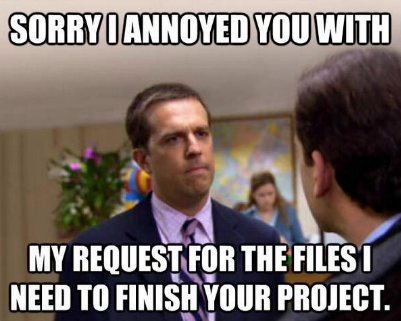
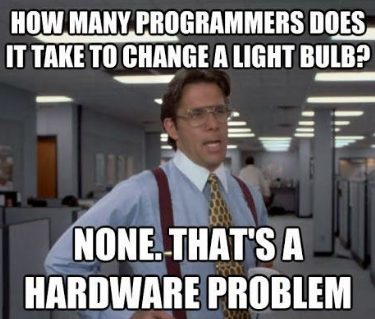
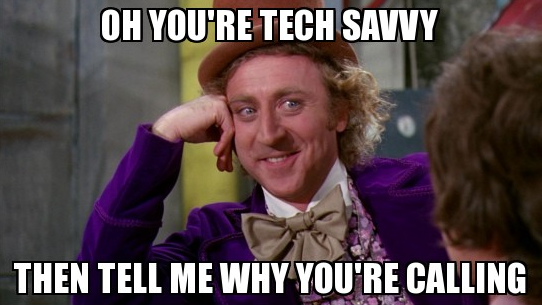
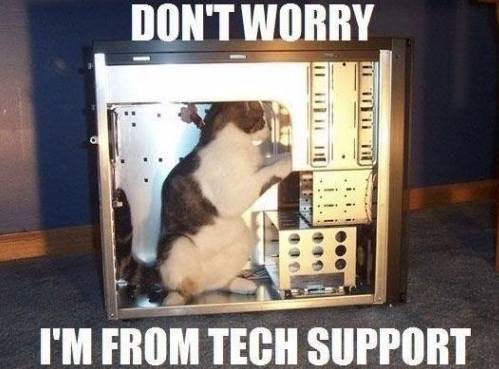
Terribly Corny IT Memes That Might Make You Might Laugh

It’s Monday and I think we all need a little humor to get us through the week.

Here are some terrible and corny IT memes that we complied from the internet. We hope that you can relate to at least a few!

  1. via Tech Republic

Screen Shot 2018-05-08 at 10.18.30 AM.png

2. Via FunnyAnd

Screen Shot 2018-05-08 at 10.23.13 AM.png

3. Via FunnyVid

Screen Shot 2018-05-08 at 10.27.37 AM.png

4. Via Call Center Memes

Screen Shot 2018-06-10 at 5.02.40 PM.png

5. Via JokeAZ

Screen Shot 2018-06-10 at 5.06.11 PM.png

Do you have some awful IT memes that are so bad they are good? Share them in the comment section below! And then check out our open Buffalo IT jobs here!

Written by Kaitlyn Gahagen


Recruiter Spotlight: Bill Bilson

Bill Bilson has been a recruiter at ComputerPeople for two and a half years. We love having Bill in the office because he is an amazing listener, he always has fresh ideas, and he is pretty darn good at his job. Additionally, the name Bill Bilson is extremely fun to say. Bill is also known in the office for taking some of the coolest vacations ever, and it is safe to say we would all let him plan our next trip [proof is in the above photo]. We asked Bill some questions about being a recruiter, and here is what he has to say!

How do you find candidates for a new job order?

I’d say the most common methods are searching through our database, searching LinkedIn, and contacting candidates who apply through our website/job boards. I also utilize both referrals and people I’ve met at networking events to fill positions.

What is the most important quality that a candidate can have to make them standout from the rest?

Tough question, as it really depends on the position/company. For me, I think it comes down to personality. If multiple candidates possess comparable skills and are interviewing for the same job, the person whose personality best fits the environment is going to land the job. Remember to always be yourself when applying for a new job.

What advice do you have for someone that is just starting his or her job search?

Try not to get discouraged because finding a new job isn’t easy. If you’ve been applying to numerous jobs online that you feel you’re qualified for, but you aren’t getting much response, review your resume and consider making some edits. Applicant Tracking Systems are told to look for “buzz” words, so comparing your resume against the job description can be extremely helpful in getting a reply. In addition, and I might be a bit biased on this, I’d recommend getting in touch with a recruiter.

What inspires you to be the best recruiter you can be?

Knowing that my job is ultimately helping others. Whether it’s our clients who have a hard-to-fill position or a candidate looking for that perfect next step, it is extremely satisfying when the stars align and a perfect match is formed.

What is something that most people probably do not know about ComputerPeople or CP Staffing?

CP Staffing is a small company, but we have three divisions and two offices. In Buffalo, we have ComputerPeople (IT focused recruiters), FinancialPeople (finance and accounting focused recruiters), and Medicalpeople (Medical focused recruiters). In Pittsburgh, we have another FinancialPeople office.

Anything else we should know about you?

I am a guitarist and a drummer; in my younger years I was pretty active in the Buffalo music scene and a couple of our songs were featured on 103.3 the EDGE.


Thanks for being you, Bill. ComputerPeople is lucky to have you!

If you have any questions for Bill or you want to work with him as your recruiter, contact him at bbilson@cpstaffing.com


Written by Kaitlyn Gahagen

Interviewing 101: The basics of a fantastic interview.

Do you have an interview coming up? We compiled some of the simplest things to remember when going in for an interview and divided them into lists of DOs and DON’Ts. Oh, and DON’T forget that our wonderful recruiters DO provide interview coaching if you need some extra help!

Do:

Do show professional body language. Do not slump or look too comfortable. Your body language will help the interviewer determine what kind of person you are within the first few minutes of the interview. Sit up and radiate confidence, professionalism, and fortitude.

Do focus your eye contact. Engage yourself in the conversation. Do not drift off away from the interviewer or look around the room. It is okay to occasionally look at any notes you may have, but be ready to maintain solid eye contact throughout the interview.

Do be prepared to concisely explain your job moves. That is going to be a question 100% of the time. You have to be able to articulately provide good reasons for moving around and this is something that often takes practice. Avoid “um” and “uh” by knowing what you are going to say ahead of time!

Do arrive on time. Not too early (desperate), definitely not late (irresponsible). Generally, walking in the door about 10-15 minutes ahead of time is appropriate.

Do bring a portfolio with paper, pen, the job description, your resume and references. This will show the interviewer that you are prepared and serious about the job opportunity.

Don’t:

Don’t touch your cell phone. Turn it off. Leave it in the car. Do not even give yourself the opportunity to look at it during an interview. If it goes off for some reason, discreetly turn off the ring without checking to see who is calling. You do not want to distract the interviewer away from your skills and accomplishments by allowing a cell phone to intervene.

Don’t trash your former company. This looks very bad on you, even if your former company was ridiculous. You do not have to lie or become your former company’s biggest fan, but always be respectful and gracious about your time with former employers.

Don’t behave anxiously. This includes moving around frequently, tapping your pen or foot, or any unusual movement or behavior. This distracts from your professionalism and credibility.

Don’t dwell on past accomplishments to the point of sounding conceited. You want to be confident and share your strengths, but you do not want to turn your interviewer off by making everything all about how wonderful you are. Besides, there will likely be plenty of interview questions that provide you with the opportunity to directly speak to what value you can provide.

We hope this helps you during your next interview! Comment below on the most important DOs and DON’Ts that you have learned (possibly the hard way) from experiencing interviews.

Written by Kaitlyn Gahagen