Category Archives: Legacy

The Importance of Proactive Succession Planning in Future-Proofing Your Company

Welcome back to another edition of the ComputerPeople Staffing blog! In today’s rapidly evolving business landscape, ensuring the long-term success and sustainability of your organization is more critical than ever. Succession planning is a key strategy to achieve this, providing a roadmap for the seamless transition of leadership and essential roles. It addresses fundamental questions such as who will be retiring, how to replace them, and the risks associated with not having a succession plan in place. Proactive succession planning is essential to future-proof your company against unforeseen challenges and maintain operational continuity.

The Need for Succession Planning

The demographic shifts, particularly the impending retirement of baby boomers, make succession planning a pressing concern. As a significant portion of the workforce approaches retirement age, companies face the risk of losing experienced and knowledgeable employees. Without a plan, the unexpected departure of key personnel can lead to substantial knowledge loss, decreased morale, and significant disruptions in business operations. Succession planning mitigates these risks by preparing the organization for seamless transitions.

Benefits of Proactive Succession Planning

A well-thought-out succession plan offers numerous benefits. It ensures smoother transitions and reduces downtime, maintaining business continuity. Proactive planning also improves employee engagement by fostering a culture of talent development and retention. Employees are more likely to stay with an organization that invests in their growth and provides clear career advancement opportunities. Succession planning also helps in identifying and nurturing future leaders, ensuring the organization remains competitive and resilient.

7 Factors to Consider in Succession Planning

Identifying Key Positions

Determine which roles are critical to the organization’s success and require succession planning. These positions often include senior leadership roles and other key operational roles that are vital to business continuity.

Assessing Talent

Evaluate the skills, experiences, and potential for advancement of current employees. This assessment helps in identifying individuals who are well-suited to take on larger responsibilities in the future.

Training and Development

Provide ongoing training and development opportunities to prepare potential successors for future roles. Investing in employee development ensures that they are ready to step into critical positions when needed.

Knowledge Transfer

Implement strategies for transferring critical knowledge from outgoing leaders to successors. This can include mentorship programs, documentation of processes, and shadowing opportunities.

Internal vs. External Succession

Consider whether to promote from within or recruit externally. Internal promotions can boost morale and retain institutional knowledge, while external hires can bring fresh perspectives and skills. Weigh the pros and cons of each approach to determine the best fit for your organization.

Timeline and Contingency Planning

Establish a timeline for succession planning activities and develop contingency plans for unexpected events. A clear timeline ensures that succession planning is proactive rather than reactive, and contingency plans provide a safety net for unforeseen circumstances.

The Cost of Not Investing in Succession Planning

Neglecting succession planning can lead to increased recruitment costs, decreased productivity, and the loss of institutional knowledge. Companies that fail to plan for leadership transitions often face operational disruptions and a decline in employee morale. Real-world examples abound of organizations that have suffered due to inadequate succession planning, underscoring the importance of being proactive.

4 Steps to Build an Effective Succession Plan

Start Early

Begin succession planning well in advance to allow sufficient time for talent development and transition. Early planning ensures that potential successors are adequately prepared for their future roles.

Engage Leadership

Gain buy-in from senior leadership and involve them in the succession planning process. Leadership support is crucial for the successful implementation of succession plans.

Communicate Transparently

Keep employees informed about succession planning initiatives and their role in the process. Transparent communication fosters trust and ensures that employees understand the importance of succession planning.

Monitor and Adjust

Continuously monitor the effectiveness of the succession plan and make adjustments as needed to adapt to changing circumstances. Regular reviews and updates ensure that the plan remains relevant and effective.

Conclusion

Proactive succession planning is vital for ensuring business continuity and long-term success. By starting early, engaging leadership, and communicating transparently, organizations can mitigate risks and prepare for the future. Don’t wait until it’s too late—begin your succession planning today to secure the future of your company!

If you need assistance with developing your succession plan, our IT staffing agency is here to help. Contact us to learn more about our services and how we can support you in creating an effective succession strategy tailored to your organization’s needs.

_____________________________________________________________________________________________

Thanks for reading! If you are a business looking to fill your important IT roles, visit us at cpstaffing.com to learn more!

If you are a candidate and are looking for dream role, visit us at jobs.cpstaffing.com for our latest job postings!

And don’t forget to follow us on LinkedIn for new jobs, insights, blog posts and more! https://www.linkedin.com/company/computerpeoplestaffing

Written by Jeff Weiss

What Happens When You Have a Personal Mission Statement

From our early stages of life, usually we all have goals and dreams. Some of our goals may change along our journey, some may remain the same, but depending on what they are and who you are, these can be very versatile. One thing that can always remain constant, however, is something we often forget to even define for ourselves: our personal mission statement.

I was listening to a radio talk show a little while ago, and while the main topic of that discussion has slipped from my mind, one thing from the conversation did stick with me. Someone was asked what their company’s mission statement was, and afterwards they were asked, “and what is your personal mission statement?” That’s when it hit me: a defined, personal mission statement can be a very powerful thing, and here’s why you should know what yours is.

  1. Your mission statement is your guide.

    Here at CP Staffing, our mission statement is
    “CP Staffing Solutions is committed to being the clear partner of choice to our client employers and the individuals that we represent.  This is achieved by working tirelessly to understand our client’s needs and delivering staffing solutions that improve their competitiveness.  We strive to serve as a lifetime source of career management for the individuals we represent.”

    This statement is what drives everything we work towards, and how we get there. My point: your personal mission statement does the same thing; it’s where all your goals and aspirations will come from in the first place – what drives you to do what you do. Once you know what you want your life to represent, what you want to stand for (what you’d like your legacy to be), it becomes easier to map out your life goals in order to abide by your mission.

  2. Your mission statement keeps you on track.

    Because your statement is your guide, it means that when you’re going the wrong way, taking a look at your mission statement can sound off the alarm. A lot of times we’ll make goals for ourselves, want things, or make decisions that seem great at first, but can hinder us instead of move us forward. Just because we fit in somewhere, it doesn’t mean that’s where we belong. Having a mission statement can help you determine not only where you fit in, but where you actually belong, because of what you want to represent. So, when you start to steer off your personal road, your guide is there to lead you back in the right direction.

  3. Your mission statement helps clarify your purpose.

    Ah, there’s that tricky subject of “purpose” again. Some people believe wholeheartedly that we all have a purpose in life, while others firmly believe that we’re just passing by, with no real intent in the universe. Well, no matter where you fall on the spectrum, your life certainly is not meant to be wasted. If you’re having difficulty figuring out what you’re meant to do while you’re walking this earth, then figuring out and writing a personal mission statement can help you live your life with meaning. It can help you make better decisions at work, in difficult situations, and in everyday encounters. Even if you’re not fond of the word “purpose,” no harm can come from finding a way to always try and show what you consider to be your best self!

What’s your mission statement? 

One thing that the special guest on that talk show said was that, when it comes to mission statements, it’s probably best to have no more than 20 words; this can help prevent you from wandering away from it in the first place. So, there’s a start – you can go ahead and figure out a 20-word sentence or phrase of what you’d like your life to represent: your personal mission statement. And hey, if the 20-word limit isn’t for you, then feel free to add more and find whatever works best. Go ahead and give it a go! If and when you figure it out, please share with us what your personal mission statement is!

Featured image: created on Piktochart

computer20people20-20talia-3875-final_zpsynpbyivy

Written By Nayadee Wilson

I Want To Be Like Them

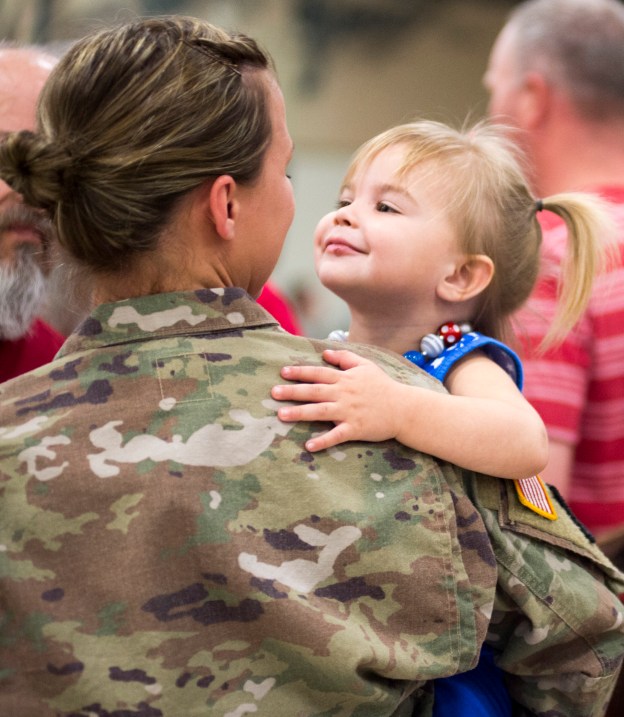
Featured image: “The National Guard” by Oklahoma National Guard

With Memorial Day coming upon us, I find myself getting into deep thought as I think about the men and women who lost their lives fighting for what they believed to be valuable. I have never known anyone who has died in battle, or anyone who’s lost someone in battle, so I don’t have any sort of emotional connection to this holiday. And if you’re in the same boat as me, have you ever stopped and just wondered what kind of people they must have been? The kind of impact they left? What their loved ones remember them by? This is what I’ve been pondering.

A little while ago I wrote about my husband’s grandmother who passed away, and the legacy she left behind. While considering the lives of those who died during their military service, it brings me back to the legacy topic. It makes me think about the kinds of things they left behind; the things they would be remembered by – even if I didn’t personally know them. Incidentally, with my mind going farther away by the minute, this makes me ask the question “how would I want to be remembered?” Even though I’ve never known them, I can think of a few things that these men and women would most likely be remembered as, and character traits that I would also want to strive for in my own life.

  1. Courageous.
    It doesn’t take a lot of thinking to know that these people had guts. It takes a special kind of someone to go into a task knowing that the outcome could be deadly. Yet, that did not stop them. They had the kind of courage that most of us dream of having, sometimes for just the tiniest situations. I will admit I do not consider myself a courageous person; I certainly lack some skill in this department. But, to have the kind of courage that these individuals had is honorable and, like them, I also want to strive to be courageous and be remembered as such.
    .
  2. Giving.
    I consider this another “no-brainer” kind of trait for all those who gave their lives in service. These people literally sacrificed themselves for the benefit of others. Now there’s a word we don’t put to practical use very often: sacrifice. Our human nature is to strive for comfort, and our inclination is often towards the easy way of doing things. But, these people disciplined themselves to put others first; to do what may be harder for them in order to make it easier for others. Although I am not in military service, I like to think that I am in the service of people; I love to do volunteer work when possible (even if sometimes I complain about the actual work). Like them, I want to be remembered as giving and generous, and strive to help those in need by giving what I can.
    .
  3. Wise.
    As previously stated, our human nature is to favor the easy way in most situations, even if it ultimately makes things harder for us. Sometimes it takes an incredible amount of maturity and wisdom to look ahead and opt for the right decision, which can sometimes mean the harder way. Although they met a deadly fate, these men and women were wise enough to know what was important, and wise enough to follow through with their values. They teach us what it’s like to make the tough choices, even when we may not want to. With their discipline and never-ending devotion they also teach us that the wisdom tank will never be full; there will always be more room to learn and more room to grow. And so, just like King Solomon, and like these men and women, one of the things I want most in the world is wisdom.
    .
  4. Purposeful.
    Last, but certainly not least, my favorite trait that I find in these great men and women is purpose. These warriors had a purpose in their life, and they followed it all the way to the end. These men and women served a great purpose that maybe none of us will ever truly understand, and it is admirable to see how dedicated they were to fulfilling it. Some people know what their purpose is in life, while some may be in the process of finding it, but all of us have a purpose, nonetheless. As for me, I’ve come to know my purpose in my faith, and that part of that purpose is to strive to shine the light within the many dark places of this world in any way that I can. Like them, I want to be remembered as someone who fulfilled her purpose.

Live like them.

Many of us will never know what these soldiers went through, and many can’t even imagine it. Nevertheless, they left a great example for us to follow when it comes to being honorable human beings. The men and women who lost their lives in service did so while showing us how to be giving, courageous, wise, and purposeful. While you celebrate Memorial Day this weekend, consider all they had to teach us, and honor them in living out those teachings as best as you can. Have a happy Memorial Day! 🙂

computer20people20-20talia-3875-final_zpsynpbyivy

By Nayadee Wilson

Living Long After We’ve Died

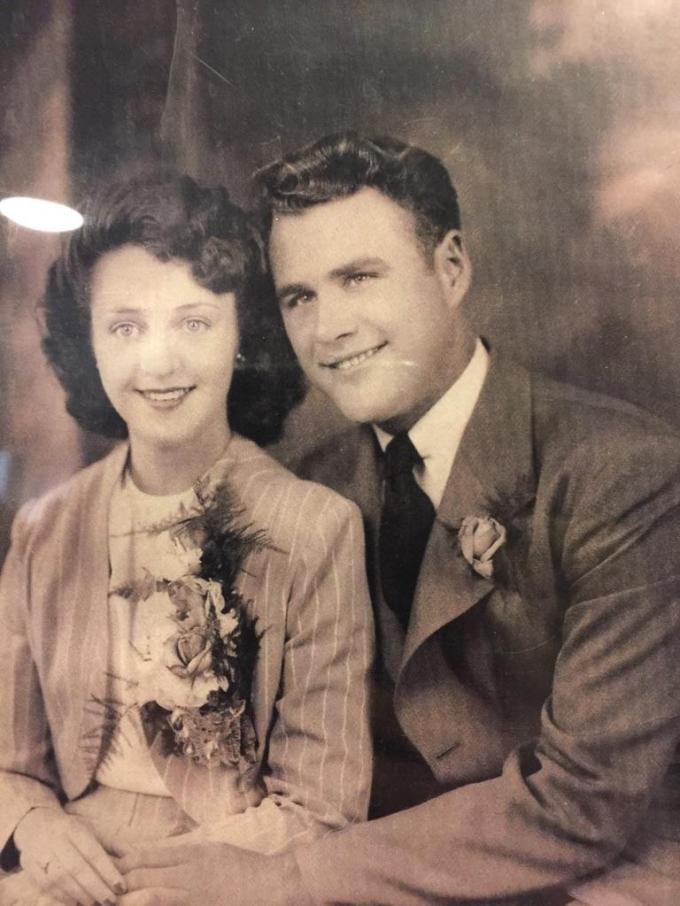
Last month, our family encountered a deep loss when my husband’s grandmother, Marian F. Wilson, passed away at the age of 94. Although I never had a chance to know her, since she was severely affected by Alzheimer’s by the time I came into the family, I couldn’t help but be moved by everything everyone had to say about her during the funeral. This, along with a message series we’ve been coincidentally studying at my church, got me thinking: our life on this earth is not over once we die. It wasn’t until this funeral that I truly resonated with the significance of this concept. There is something incredibly genuine that comes with our death, and that is the impact of our legacy.

16999059_1520263557991918_1954582548492505593_n_zpsfw5bktgqI’ve got my job.

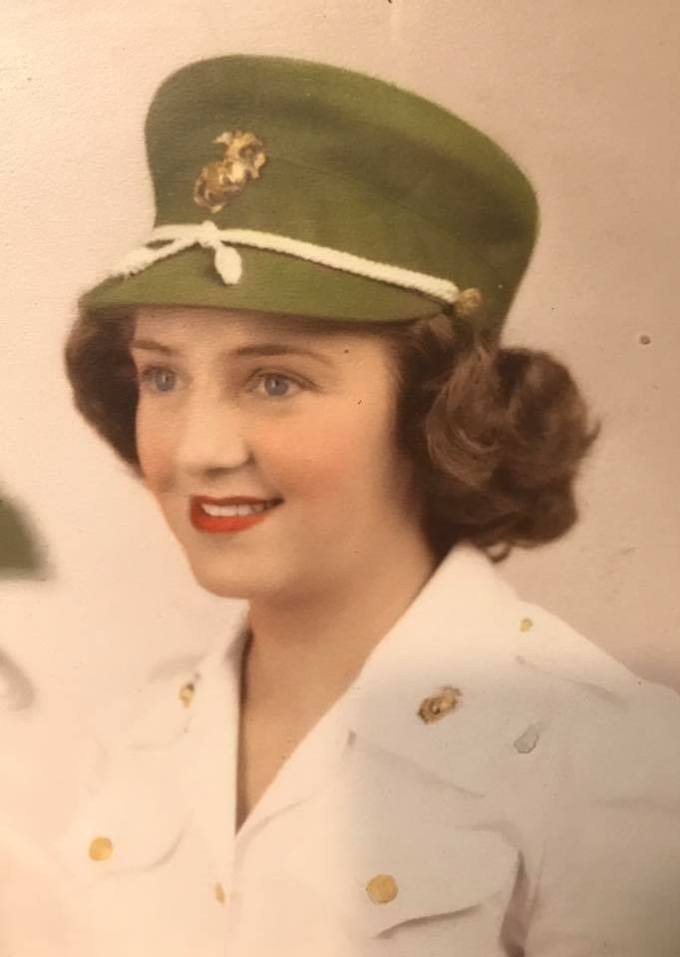
This lovely lady had what some may call one of the best and most honorable jobs in the country: she was a U.S. Marine (a WWII veteran, to be exact). Needless to say, this wasn’t the kind of profession that you’d nonchalantly refer to as a “job.” This was different; this was a calling and devotion. Even still, as prestigious as this profession was, it was interesting to see how every person that spoke about her didn’t really mention much about what she did while she served, but rather the areas of her character that were simply shaped by her service. We heard wonderful stories of how she raised her children, the values that she instituted in her family, and the adversities that she had to overcome as a single mother when her husband died unexpectedly. And to top it all off, the one and only thing I remember anyone saying about her regular, non-military job was: “she worked at the store.”

Oftentimes we become so indulged and submerged in our jobs and career paths, buying into the lie that what we do for a living is our identity that it makes us forget about what really matters. Your job, no matter how amazing, should not be your identity. The reality is that no one at your funeral will remember you as “John the accountant” – at least, not the ones who truly get to know you. So, take some time to disconnect from your “job” and invest time in those you love. Start building your legacy with the people and things that matter most.

img_4208_zpsq1mzxgvjI’ve got my things.

As the eulogies kept coming, greater and funnier stories kept being told. All of those stories were about her car, how big her house was, and all the wonderful things she had. I’m kidding – they were about none of that. Nope; Mrs. Wilson didn’t exactly have what would be classified as a glamorous life. As a matter of fact, the only thing I remember on this topic is someone saying “we grew up poor.” But man, was her life rich. The stories about Mrs. Wilson and her dedication to her family and loved ones just kept pouring, and laughter amidst mourning filled the entire room. The stories of her chasing after my father-in-law as a kid were especially funny (of course, Ken, my father-in-law, clarified that his mischiefs were only a result of his older brother’s leadership). 🙂

No one talked about this lady’s possessions, or her money, or the things she had. Yet so often we become so incredibly stressed, drowning in debt due to buying things we can’t afford. Here’s another reality: those things will not go to the grave with you. Your possessions and your money ultimately do not define you, and these should also not be your identity. So why not take some time to de-clutter? Or make a plan to get out of debt? I doubt that you’d want your legacy to be “John, the one with lots of stuff.”

img_4203_zpsvkjou3kgI’ve got my looks.

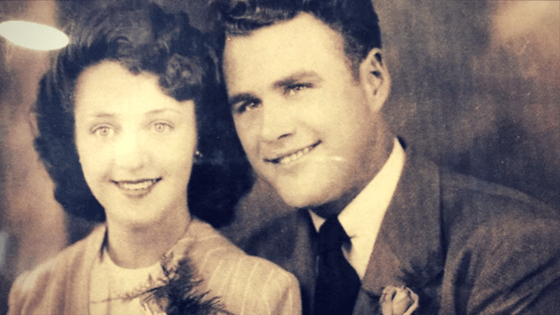
Marian Wilson was as beautiful as an angel. During the wake, the place was filled with old pictures from her earlier years. I remember looking at every single one and being amazed, mainly because her husband could have been my husband Patrick’s twin, but also because she truly was beautiful. As great as she looked, no one talked about her looks, either. I remember someone telling the story of asking Mrs. Wilson, “Grandma, how come you won’t get married again?” to which she comically responded: “What kind of man do you think would be so out of his mind to take on a woman with six kids?”

Yup, Mrs. Wilson was full of personality that went beyond her looks. Then I thought, how often do I spend endless minutes trying to get the perfect selfie? We’ve become such a surface-level society where appearances have become the center by which we rotate, that we are slowly being consumed by it. I was reading an article today about a young lady who was sent home during an interview due to her outfit. Although I do believe she was wrongly judged and shouldn’t have gone through that experience, I was really disappointed by something she said: “I realize that my appearance is who I am.” There is so much more to our legacy than our looks; your appearance is not your identity. So how about you take a day off from having the perfect look, and maybe just go serve someone in need?

img_4206_zpsmfmwdaysI’ve got my kids.

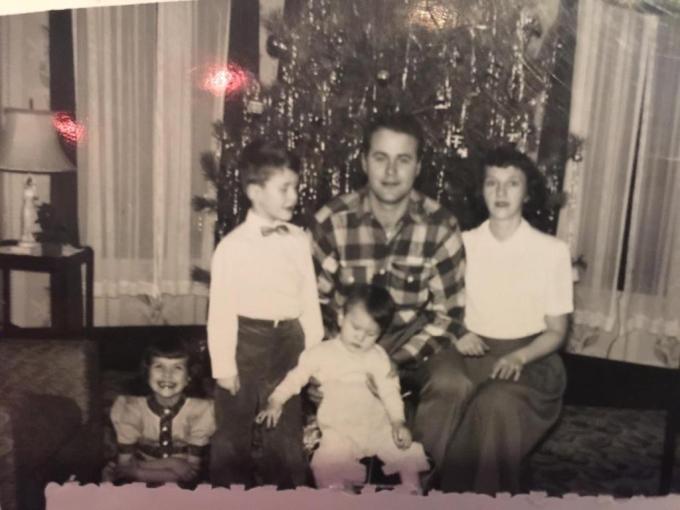
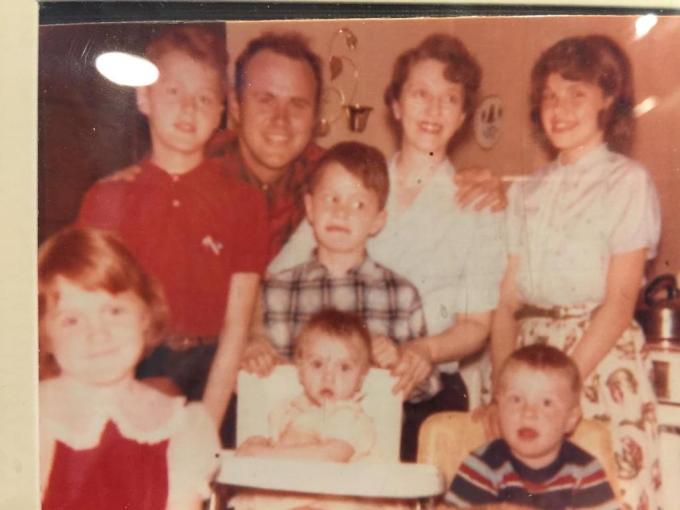
“So if it’s not my job, my things, or my looks, then I guess my legacy is in my kids?” Well, I’m not so sure about that. Mrs. Wilson had six kids all together, all of whom grew up to be wonderful people. Yet, I wouldn’t call them her legacy directly. When it came to the topic of her children, most of what I heard about this woman had to do with everything she had taught them. Her children didn’t become her legacy; the things she taught them did. Her kids didn’t represent who she was; their morals did. Her kids didn’t show the world around them what she was about; their values did. While her children may not be her legacy, her children will carry it out long after she’s left them.

Our lives truly do continue to speak to the world long after we’ve gone. And so, I stop today and think: “What am I teaching my children? Where am I leading them? What values am I imprinting in their lives? What am I imprinting in others’ lives? How well am I loving my husband?” Our legacy will continue to speak to the world, whether it’s a good one, or a not so great one. Take some time to reflect on your life, and ask yourself “what will be my legacy?”

In loving memory of Marian F. Wilson

16996210_1520263981325209_6932893240739788039_n_zpsuv8sv7cy

computer20people20-20talia-3875-final_zpsynpbyivy

by Nayadee Wilson