Category Archives: productivity

8 Ways To Keep Your Office Organized in 2018

Keeping an organized office is one of the simplest things you can do to increase your productivity, happiness, and efficiency at work. Although keeping your office clean can seem difficult, you can use these 8 tips to make the job easier.

  1. Go paperless. Whenever possible, you should try and reduce the amount of clutter flowing into and out of your space by transitioning to online information storage. Create folders, labels, and paths for your information to be kept online. The key with this is making sure you save your files in a place that can be easily accessed and found.
  2. Invest in a labeler. The documents that you cannot afford to store online should be put away in a distinct drawer, file, or closet that is neatly labeled.
  3. Purge your office. Go through your entire space and get rid of things that you haven’t used in a while. It can be difficult to part with some things, but your office will never be organized unless you reduce the amount of items that are inside it.
  4. Don’t wait on sorting your mail. One of the most common culprits for a disorganized office is the build up of mail. The solution to this problem is to start a habit of sorting your mail as soon as you get it so it does not build up. Throw it out, delegate it, or read and file it.
  5. Organize your desk drawers. Use dividers and separators for different items that you keep in your desk so you always know where to find what you need.
  6. Reduce the view of your cables. We know that cables are a necessary part of the electronics in your office, but there are several easy and cheap ways to hide them and get them out of site. You can attach a rain gutter to the bottom of your desk to keep the majority out of view, or buy equipment designed for managing cables. Personally, I believe this one makes SUCH a big difference.
  7. Use your wall space. Moving select items from your desk to the wall can really free up your workspace. Mounting your computer screen, calendars, or pictures is a great way to add room to your desk. This is especially effective if you have a small desk.
  8. Have a mini cleaning session at the end of the day. Never leave your office in a mess. It’s a lot easier to clean up for five minutes at the end of the day than it is to let your mess build up and have to conduct a major clean up session.

apple-apple-devices-clean-205316.jpg


Written by Kaitlyn Gahagen

Memory-Increasing Tips For All To Try

“When is this project due again?”

“What did my boss say to focus on during this presentation?”

“Wait, was my intern’s birthday today or tomorrow?”

It has been found that people remember 10% of what they read, 20% of what they see, and 30% of what they hear. While different scholars have found that this concept may be inaccurate, one basic idea shines through – People don’t remember very much. So what can you do to increase your memory? Maybe try some of these tips, if you can remember them!

  1. Become interested in what you’re learning. It is so much easier to learn about stuff you care about instead of trying to advance in a field that you have no desire to learn about. If you can’t become interested, try learning about something else.
  2. Leverage your visual and auditory memory. These are the areas where your memory will be most effective, so if you need to remember something, you should say it out loud! In addition, if you can think of a way to link a visual to what you need to remember, your chances of remembering are definitely going to increase.
  3. Associate new information with what you already know. Make comparisons, remind yourself of past memories, or link new information to something else.
  4. Write out things you need to remember. If you are reading something, try summarizing each page by writing out key facts. It may take longer, but you will definitely remember more!
  5. Sleep! Without proper sleep, you won’t be able to remember anything. So do what you have to do in order to get to bed on time.


dsc_5490-1.jpg

Written by Kaitlyn Gahagen

How To Handle The Last Question of Every Interview

You made it to your interview early. You are dressed to impress. You have the perfect resume. You have clearly articulated your career accomplishments and future goals. But oh no…here it comes…the question that you did not prepare for…the interviewer asks, “do YOU have any questions for me?” Should you ask something? Should you just smile and shake your head?

Have no fear. Ask one or two of the following questions in order to get a little but more info and show the interviewer just how prepared you really are!


GENERAL QUESTIONS FOR THE INTERVIEWER

What character traits do you look for in your employees?

Where have you seen personal growth occur due to the company’s investment in its employees?

Why did you come to this company?

What’s your favorite part about working here?

 What gets you most excited about the company’s future?


JOB SPECIFIC QUESTIONS

Is this a new role that has been created?

What are the biggest challenges that someone in this position would face?

What attributes does someone need to have in order to be really successful in this position?

What training programs are available to your employees?

Where have successful employees in this position progressed to in the past?

What is the performance review process like here?

How often would I be formally reviewed?

Is there anything that concerns you about my background being a fit for this role?


dsc_5490-1.jpg

Written by Kaitlyn Gahagen
Screenshot taken by Nayadee Wilson from YouTube.

Why You Should Listen to Ron Swanson

If you’ve never watched Parks and Recreation, let me tell you that you’re missing out on a major treat and should definitely put it on your watch list. Parks and Rec is a documentary style, political comedy about a group of local government employees (within the parks and recreation department) in the fictional town of Pawnee, Indiana. Some of the major characters in the show are Leslie Knope, a passionate and strong-minded woman who is determined to make Pawnee a better place, and Ron Swanson, a simple, straight-to-the-point libertarian who could care less for the government, yet is the director of the Parks and Rec department. Ron is one of my favorite characters because, 1. It’s impossible not to laugh with him, 2. Throughout the show he actually provides great, useful advice to basically everyone, and 3. His quotes are the best.

In episode 16 of season 4 (Sweet Sixteen), Leslie is trying to manage her campaign for city council while also handling her deputy director job in the Parks department. Ron keeps insisting that she take a leave of absence and focus on one thing at a time, but determined Leslie refuses to do so. Why am I writing about this? Well, because if I had a quarter for every time a job seeker said “I’m great at multitasking,” or every time an employer stated “We need a candidate with the ability to multitask,” I probably could have paid off my house by now. Episode 16 of Parks and Rec can teach all of us an often overlooked truth: multitasking isn’t all it’s cracked up to be; it’s actually not the “greatest” skill of all.

  1. Leslie had super powers. Which were fake.

    Leslie believes she can do it all. And, frankly, she’s usually very good at accomplishing what she wants. Nonetheless, during this episode, where she attempts to use her “I-am-Leslie-Knope” multitasking powers, she fails to see how they aren’t working when things begin to fall apart. As Ron begins to take notice, he immediately advises her to “take a sabbatical.” When Leslie ignores his advice, Ron decides to keep an eye on her while being amused by her mishaps, waiting for her to figure out on her own that she’s overworked.

    Like Leslie, most of us who pride ourselves on being great at multitasking believe that we can do it all. However, research shows that our productivity actually goes down by as much as 40%, and we get a lot less done. So, if you’re like Leslie and have tricked yourself into thinking you’re Superman or Superwoman, this serves to show that you should probably just listen to Ron Swanson.

  2. Leslie was in control. Of nothing; she was in control of nothing.
    .
    Leslie was so used to tackling a million things at once that this was a no biggie for her. She had been multitasking for so long that she was great at it, and had everything under control – except, she didn’t. While Leslie tries to manage her job and her campaign at the same time, she eventually loses control of her situations and mentally crashes (she ends up falling asleep during the surprise party that she was throwing for her coworker, Jerry). 

    The reality is that we don’t actually multitask, we just switch from one task to another – some can just do this quicker than others. When this happens, we become less competent in what we are trying to achieve – and the more we do it the worse it gets. “Practice makes perfect” doesn’t actually work in this case, no matter how badly we want to believe that it does. If you find yourself losing control while trying to do it all, then you should probably listen to Ron Swanson.
    .
  3. Leslie dropped the ball. More than once. More than twice.
    .
    In the episode of “Sweet Sixteen,” Leslie made mistakes. A lot of them. For example, Leslie is always very caring about her coworkers, and never misses their birthdays. But, this time she forgets Jerry’s birthday and attempts to throw him a belated “sweet 16” party (he’s 64, but his birthday is on February 29th so she reasons that he’s only had 16 actual birthdays). She then forgets to invite Jerry. She also forgets to pick up the cake. In the meantime, she realizes that they’ve also messed up her campaign signs, so she rushes back to the printer to have them fixed, and then replaces every single sign in Pawnee herself. They finally make it to the party sometime in the middle of the night, waking everyone up, and she then falls asleep on the couch, on top of Jerry. 

    What happened to Leslie is far from unusual; we actually suffer a fall in IQ when we become distracted by multiple things (which can be the same impact as losing a night of sleep). As it often seems to happen with most of us, while Leslie is usually on top of her game, everything came crashing down when she attempted to do it all – she should have just listened to Ron in the first place.

Listen To Ron Swanson

The next morning, Ron takes Leslie out by the lake and has a talk with her, finally convincing her to take a leave of absence. It was this sole moment in the entire episode that made me want to write about it, and it is one my favorite Ron Swanson quotes as of yet (depending on what else he says – I’ve recently discovered this show, so I’m a little behind). Like many of Ron Swanson’s quotes, what he said to her was simple, to the point, and had a sense of eloquence. The reality is that when we give our attention and focus to one thing at a time, the results are usually ten times better than what they would be otherwise. So, the next time you’re in a multitasking nightmare, you should just take a deep breath, and listen to Ron Swanson: “Never half-butt two things. Whole-butt one thing.” Of course, his actual quote is slightly jazzier than how I put it:

The-best-quotes-by-Ron-Swanson - from Thumbpress
For some of Ron’s funniest quotes, go here. And to tap into some Ron Swanson wisdom, check this out.

computer20people20-20talia-3875-final_zpsynpbyivy

By Nayadee Wilson

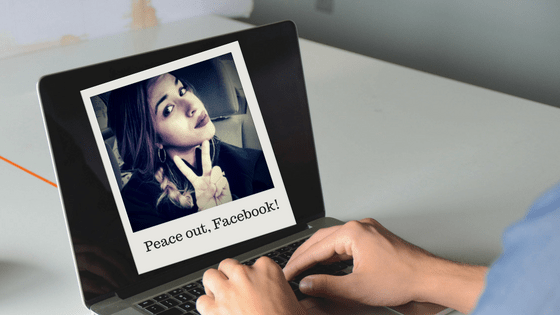
I Broke Up With Facebook Like, a Month Ago; We’re Just Friends Now.

It started off like any other relationship; at first, I loved Facebook, and Facebook loved me. I loved connecting with family and friends that were far away, sharing my thoughts, pictures, and adventure tales with all. But then, also like many relationships, it became toxic and destructive. All of the sudden there was drama everywhere, arguments that came out of the blue, and ultimately I was beginning to feel depressed anytime I was on Facebook – and much of the negativity was starting to rub off on me. The break-up phase slowly started with me just hitting the “hide post” button on statuses that I would find upsetting – which was great, because Facebook eventually got the hint that I didn’t want to see those kinds of things anymore, and so these statuses got to be fewer and fewer by the day. Then, it continued on with me clicking the “unfollow” button when I thought a connection was just… not my style. Finally, something made me decide that I really needed to break it off.

According to an article I read, addiction to technology is not a figure of speech – it’s an actual addiction. In fact, it talked about how in the midst of technology use, the brain of someone who is addicted to it looks just like that of a substance abuser. Other studies also show a strong correlation between the use of social media and depression, as well as anxiety and overall well-being. This addiction also affects your performance at work, your focus, and your personal relationships. After reading and relating to these findings, I thought it’d be a good idea to lay off the social media for a while (my only personal social media pages are Facebook and LinkedIn), and here’s what happened.

Week 1

The first week was tough; I still had to go on Facebook for work purposes – to post the company blogs I write, engage with the company Facebook page content, etc. – but I stayed off my news-feed and steered away from personal notifications. I was like an alcoholic working at a bar – working with the substance but not able to drink it. Still, I was determined. It became really tough when I went home, since I didn’t know what to do with my phone – most of what I used to do on my phone was browse through my Facebook news-feed. I found myself going back and forth on my phone, hitting my home button several times, locking and unlocking the screen for no reason, until eventually (after about 2 minutes of this behavior) I’d put the phone down and go do something else. I’d do this at least three times after I’d get home from work (and I have kids! O_O). That’s when I thought, “Wow, this really must be a problem.” So I was even more determined to stay off the ‘book.

Week 2

The second week was not much different than the first week. I was still struggling and fidgeting with my phone all the time, barely managing to stay off Facebook, but I observed a few things – some good, some bad. I noticed I was a little more agitated than usual; getting annoyed by the smallest things. Meanwhile, in the back of my mind, I’d find myself thinking of two to three-sentence summaries of what I could post on my status of whatever was currently annoying me – or, at other times, whatever was making me happy. Then it hit me: “could this be what withdrawal feels like? Oh my… I have a problem.” This realization gave me the motivation I needed to focus my attention on other things. I started to read more books (not just online articles), I was praying more, and I was being more productive around the home. Nothing crazy; I didn’t make a complete 180-degree behavioral change. However, I was making small, significant changes; noticeable changes. Still, although on the one hand I felt significantly less depressed, on the other hand I felt out of place and anxious because I couldn’t go on the site that I’ve been going on for years, on a daily basis.

Week 3

This was the week I noticed some of my habits changing. A prominent one was how I was obtaining information on current events – I became a little smarter in how I searched for news. If I saw a headline that read “Maria wore a red shirt on Wednesday, March 29th,” I’d recognize this as a news report. However, if I saw a headline that read “Maria wore a shirt on Wednesday which was a color that represented blood – does she want everyone in the world dead?” I’d recognize this as a formed opinion of the writer (and of course, we all know how many of these we see on social media). So, I learned to obtain more reliable information. Additionally, I was no longer checking my phone as soon as I woke up (thank God!) other than to just turn off my alarm. I also slowly became more involved with my husband and kids – I was playing more, I was aware of new things they were doing, etc. Although I did become a tad clingier with my husband, it was still good :).  I did respond to a message and maybe a few comments on my personal Facebook this week (outside of my blogs), but I was able to close it right up as soon as I did those couple of things – no news-feed, no picture posting (other than the ones I’ve been tagged on), and no status update; just off.

Week 4

This is the week where my anxiety was almost gone (I am currently on week five, almost six). I no longer felt like I was “missing something” because I wasn’t on Facebook. I actually met with friends in person, I was volunteering more, I was making new friends, and I was actually a part of society as opposed to just observing it. It felt (and feels) great! This was the week where I truly realized I don’t need social media. This time around I decided to give myself “permission” to go on Facebook – but I just didn’t really want to. I went on to see a cute little video my mother-in-law made of my son, I commented on it, loved it, and that was it. However, as much as I loved the positives of this break-up process, I also became aware of some negatives. Remember the part where I said I became a little clingier with the hubby? Yeah, well, by going through the “social media withdrawal” and the anxiety that came along with the process, I became a little more demanding, and found myself getting angry or upset expecting poor Patrick to substitute my need for social media with 24/7 of his attention to just me. I also found that I was very, very subtly substituting my Facebook addiction on my own with something else – I found a new shopping app that I started to spend up to 45 minutes on, even if I didn’t buy anything; I just needed something to look at. But, fear not! – it didn’t take long for me to recognize what was happening, and since then I’ve learned to do my best to stop this behavior as soon as I’m aware of it; I was back on track ;).

Results

Like with any toxic relationship, breaking up takes hard work and a lot of determination. The lingering ex will come knocking at your door (or your phone), begging for another chance or giving you the “sweet talk,” making you fall for it every so often. Then, once you’ve firmly decided to move on, you push through the crying nights, push through self-debates of whether you should go back or not, realizing after a long while that you’re finally over it – you could actually have a conversation with your ex and be OK.

Yeah, it was a little tough (still is) getting through the motions of detaching from social media, and I hit some road bumps along the way, but the benefits of setting yourself free are incredibly worth it! I can now go on Facebook without feeling the need to spend an hour on it or to go on it daily. Social media addiction is a bigger problem than you think, and it wasn’t until I decided to cut back that I realized just how bad it can be. After experiencing the rewards of staying off the screen, becoming more involved in my community and with my family, I can honestly say that I recommend this 100% to anyone who is willing to make a change for the better. It’s a bumpy ride, but it’s worth getting through it. So don’t be afraid of letting go; go ahead and unplug. I’m sure that after a break-up any loved one would tell you the same thing I told myself: “You deserve better – it’s time to get out there!” 😉 

computer20people20-20talia-3875-final_zpsynpbyivy

By Nayadee Wilson

Maybe You Should Just Start Showing Up

*Featured image: Delana Flowers (far right and front) during a performance in 2015*

I think that the greatest talent that humanity has is making excuses, and the greatest impediment to our goals is actually having these said excuses. However, a lot of us have been able to get around those impediments and work toward our goals anyway. Some of us have come to a place in our lives where we tell ourselves, “So, I can’t do this… but I’m going to do it anyway and see what happens.” Woody Allen once said “80% of success is showing up,” and I can’t think of a better example of this notion than our very own Delana Flowers, who starred as Lorrell in the musical, Dreamgirls, at Pittsburgh Musical Theater this past week.

Delana Flowers, our awesome admin at FinancialPeople Staffing in Pittsburgh, has an incredible preforming talent, and some pretty amazing pipes – the girl can sing! As we all began to talk about her show around the office, I asked Delana to tell me more about her performing side. As it turns out, most of Delana’s performing success all started with her decision to simply show up to things she didn’t even intend to take part in. As she went on to tell me her story, something she said immediately stood out to me:

“I moved to Pittsburgh where there was plenty of Community Theater. I got involved almost immediately, but totally by accident, after being dragged to a rehearsal supposedly to observe. From then on, God continued to open doors for me.”

Delana went to a rehearsal just to “observe,” and out of this no-biggie attendance to something she wasn’t even a part of, she began to be involved in the things she was passionate about. What’s interesting is how she stated that she was “dragged” to this rehearsal, so it doesn’t look like her heart was necessarily set on going to this – but she went anyway. So, what happened? Well, she showed up, which led to her being cast in Ain’t Misbehavin in 2008, she was cast as Dinah Washington in 2015 (a show with 25 plus songs she had to learn from scratch), she was cast in JH: Mechanics of a Legend, and, in Delana’s own words, she “did more community shows than I can count at this point.”

The story of attending that rehearsal alone demonstrates the power of showing up, but it doesn’t end there. To land her role as Lorrell in Dreamgirls, Delana had some more showing-up to do. Not only did she have to show up, but she had to do what most of us dread: wait (Ugh! – right?). This is what she had to say about her audition for Dreamgirls:

“I saw an ad for a regional theater holding auditions for Dreamgirls. I wasn’t going to go because I didn’t feel like I knew how to audition on a professional level. My leading man in John Henry pushed me to go. He told me I had nothing to lose. I was nervous, but I went. They called me back 3 times and a whole month went by before I heard anything. Meanwhile, my co-star who pushed me to go to the audition found out in a matter of days that he had been cast. Finally, the call came and rehearsals were to start a week later.”

I’m sure we can all empathize with Delana in one way or another, like being a nervous wreck before an interview, doubting yourself, waiting for that call afterwards to know whether or not you got the job – just to mention a few. Nevertheless, she hung in there, she showed up, and boy did it pay off! Of course, this is not to say that all you need to do is just “be there,” Delana also talks about the hard work that came afterwards:

“I walked into a room full of actors and dancers… with musical theater degrees, music and/or dance degrees and classical training. I came with none of these things! We had a 3 week rehearsal process to put up this Broadway level show. If you added up the rehearsal hours which were typically 8 hours a day, it amounted to about a week and a half. It felt like boot camp! …This was my first professional show and my first show at one of the big theaters downtown. I was terrified and I had several meltdowns along the way.”

Finally, with heartwarming joy, Delana ended her story with this:

“I made wonderful new friends who refused to let me doubt myself. They worked tirelessly with me to learn everything I needed to learn. This was the hardest and biggest thing I have ever done. All I could do was keep showing up, keep working, and cry when overwhelmed. By the time we closed the show last Sunday, I couldn’t believe I had been part of such a spectacular show. It was an absolutely amazing experience I will never forget.”

Needless to say, working toward your goals will most definitely require hard work, but the hard work will never get started unless you start showing up – like Delana did. There will always be times in which the possibilities we dream of seem almost unattainable, where we will doubt ourselves, have meltdowns, and wonder if that small step will even be worth it. Well, Delana’s success story raises two very important questions that we should always keep in mind: How many doors could be opened for you, if you simply show up? How many doors will you continue to miss? Maybe you should just start showing up. 😉 

Check out some clips of Delana’s performance!:

computer20people20-20talia-3875-final_zpsynpbyivy

By Nayadee Wilson

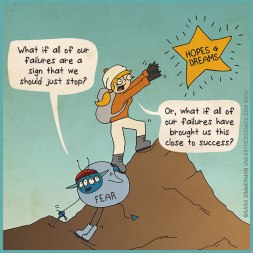
Is Your New-Year’s Resolution Useless?

As the new year approaches most of us have decided on, or are thinking about, a New Year’s resolution. Being carried away in my thoughts earlier today, it suddenly dawned on me: why do we have New Year’s resolutions, anyway? I mean, most of the time, let’s face it; we don’t exactly follow through. Time and time again I see myself, and others, fail miserably before the end of January to attain the infamous purpose that we had so excitedly set forth. Nevertheless, I did brainstorm a few reasons why having a New Year’s resolution is actually pretty beneficial, whether you’re able to achieve your goal or not.

  1. Everyone likes purpose.

    One thing that I know for sure is that having goals in life is essential for your overall wellbeing – it gives us a sense of purpose and meaning. Having goals, such as a New Year’s resolution, to work towards gives us the intrinsic motivation that otherwise we may not always find elsewhere. Although sometimes hard to achieve, and oftentimes we may fail to achieve the desired end result from these, we shouldn’t be too quick to overlook the inevitable impacts that come simply  as a side-effect of pursuing a goal. Whether your goal this year is to start a business, or to just be able to get out of bed before noon, goals are important no matter how big or small. 🙂

    Tip: if you’re having a hard time achieving your New Year’s resolution, try examining what your goals are. If you have too many of them, it can be overwhelming and will ultimately cause you lose focus on what should be your priority. Try listing all of your goals on paper, pick the top three that are most important, and focus solely on those instead. This will give you a greater chance of success.

  2. Adulting like a rock-star.

    What’s another great side-effect of setting goals? It forces you to be responsible. Of course, this will depend on how committed you are to your goals. Nevertheless, it is a great way to make you feel like you are awesome at being an adult :). I personally miss the time when I was 7 years old and had no idea where money came from. I remember asking my mom: “Where do you get money? Is it like a building where you go and they just give it to you?” Good times… Then, of course, I came to a rude awakening when I found out that people don’t just “hand” you money. Point is, we don’t always like living the responsible adult life, yet when we have goals, being responsible becomes a little easier and more habitual.

    Tip #1: One way to spark the responsibility side-effect is to set a time line for your goals. Want to lose/gain 10 pounds? What’s a reasonable timeline for accomplishing this? Or maybe you want to write a book; how many chapters or paragraphs would you like to have completed in a month? And so on, and so on.

    Tip #2
    :  Unless you’re incredibly disciplined, it may be hard to achieve your goal without some accountability. Find someone you trust to hold you accountable for your goals. This way, if you start to slack off, you’ll have someone to encourage you to keep going.

  3. More to come.

    Another awesome goal side-effect is that while we are pursuing goals we become hopeful. Hope is that thing that gives any human being motivation to do one thing: keep moving forward. Think about it; if you had no hope for anything lying ahead, what would be the point of doing anything towards your future? When you pursue your goals, you are being hopeful that you can achieve it, and a good result will come out of it – this is why you set it in motion in the first place.

    Tip #1: If you’re having a hard time having any hope of achieving your goals, what you might want to do is take some time to focus on the end result (although being careful not to dwell on it – remember that you also get lots of small victories in the process). If you can picture yourself at the end of it all, and remember why you wanted to do this in the first place, it can motivate you to keep working – one step at a time.

    Tip #2
    : To pick up on that first tip – take it one step at a time. Celebrate the small victories! So maybe you haven’t started your business yet, but perhaps you’ve made some great connections in the process. Or maybe you haven’t written a book, but you’ve written a few paragraphs and placed your heart on paper, letting yourself know you can do it – that’s a start!

  4. I can only get better.

    What else can we get out of having goals? We learn a lot about ourselves in the process. We learn what makes us tick, what doesn’t, what works for us, and what harms us. Anytime you take the initiative to work towards anything, it brings within itself an opportunity to learn. (For example, I have learned that no matter how hard I try or what I try, I am not a morning person… at all). No matter what the end result is, whether you succeed or fail, there is no doubt that you will learn things about yourself you might have not known before. And as you know – Knowledge is power!

    Tip
    : This will probably sound repetitive and cliché, but it is so true. If you’ve failed at achieving your goal, this failure is simply a lesson to be learned. When you fail, you learn about the things that did not work for you. Use this knowledge to improve yourself rather than to self-criticize.


  5. Time to straighten up.

    Lastly, as Jim Rohn put it, “Discipline is the bridge between goals and accomplishment.” When you are committed to your goals, the inevitable happens: self-discipline. A “goal” is something you have not achieved before, that you are willing to work towards; a desired result in your life. Working towards your goals will require you to do things that you may have never done before, forcing you to create new habits and commit to these – and this is a great thing! When you create self-discipline, it is a trait that stays with you past the desired achieved (or failed) result. So, regardless of the outcome, remember that the process of this very same pursuit will only benefit you in the end.

    Tip: If at first you don’t succeed, you can dust it off and try again! Don’t forget that there is always next year. 🙂

*All images/comics used in this blog were obtained from Unearthed Comics*

computer20people20-20talia-3875-final_zpsynpbyivy

By Nayadee Wilson

Getting Your Mojo Back After The Holidays

Even as I write this I am struggling to keep my focus and motivation. What others would call “writer’s block,” I am calling procrastination. To be fair, I believe that this is simply the effect from a cause that we all know too well: the “After-Holiday Blues” (I think I just made that name up, but you get my drift). There is no doubt that returning to work after the freedom of the holidays is hard; the heavy thought of “I don’t feel like going to work today” fills our mind like an ugly plague. To get out of the wishing-for-a-never-ending-holiday stage, here are some ideas that may help in getting your mojo back and start up some motivation.

Music heals all.

One thing you may want to try is playing some cheery music (quietly, if allowed) while you’re working. Music has the amazing effect of altering the way we feel. Playing music while you work will make you feel happier, and in turn, more productive and motivated to work. I, for example, like to listen to talk shows while I work – not necessarily “music,” I know, but it is something that soothes me and makes me feel good. When I don’t have my talk shows on, I love to listen to upbeat songs and have my own little party – you could do the same 🙂 . Additionally, if you wanted to keep the holiday season going in your own way, go ahead and play songs like “Sleigh Ride” (one of my favorites) over and over until you’re satisfied – whatever makes you happy! Whether cheery music means sad country songs or super upbeat Christmas songs, choose whatever works for you; get working while enjoying the beat.

Something nice to have.

I am always like a little kid on a sugar rush any time I have anything new – it could be something as simple as a nice pen (I do love nice pens *_*). If you’ve received something nice during the holidays and you can bring it to work, go ahead and take that with you. Having something nice to look at, especially something you really enjoy, will make you feel more at home and boost your mood. I’d recommend even getting some nice office supplies of your own (or something related to the job that you do) so that you’re motivated to use it. New things are always exciting! These can range from really cool mouse pads, to awesome pens, a fancy calculator, or even just a plant for your desk or a new picture for your screen background. Today, for me, my nice thing to have was a really nice sweater that I got over the holidays. I feel pretty and uplifted, and that is what counts! 🙂 Of course, not everyone has the same likes/dislikes, just make sure that you find something that makes you feel inspired and bring it with you – whatever that may be.

There is always a first step.

This blog is a prime example of the power of this tip. I was not initially motivated to start this, but without thinking I just opened up Word Document and started writing – now here we have a blog. Every job or task that you have needs to start somewhere, and all you have to do is take that first step. Chances are that once you get started on your task, you will gain momentum and follow through with the project; even if it is just for that day (then you have to take that first step again, the next day). Usually the first step is always the hardest to take, but, in most cases, it will always be the most simple. You will quickly find that just a few minutes after taking that step, you’ve actually already made some great progress. 🙂

We can be merry all year round.

I know there are times in which we all wish for longer breaks, but what fun would that be? After all, our breaks serve as great satisfaction after a job well done. Although some may be wishing for the holiday season to just be over with, most of us can agree that, even so, coming back to work can be mentally challenging. At least now you know that there is no need to fret, and you can easily get your groove back in the workplace. Just because the holiday season is over doesn’t mean that you can’t carry it on in your own way, if you wanted to. For this New Year, remember to stay merry, and never stop showcasing the best of your talents – that is what you are there to do!

computer20people20-20talia-3875-final_zpsynpbyivy

By Nayadee Wilson



Feeling Overwhelmed? End the Haunting of Stress in the Workplace.

I saw a post from a friend earlier this morning that read “stress can kill you.” And it is, indeed, a very scary thing – it would make a great Halloween costume! Stress in the workplace is such a common phenomenon, that it is no wonder there are hundreds of articles discussing the topic and offering advice on how to deal with it. After all, according to the American Psychological Association’s annual “Stress in America Survey,” a whopping 65% of Americans referred to work as a top source of stress in 2012, and in 2015 money and work still remained the top two causes of significant stress. Although I have found most articles helpful, I can’t help but notice that most of these tend to emphasize solely on stress emerging from work situations or the work environment. However, sometimes stress comes from other sources that don’t necessarily relate to our work experiences. So I’ve decided to break down the sources of stress in the workplace into three categories: Stress from home, Stress from work, and Stress within you.

My personal life is falling apart.

So maybe your job is great (yay!); maybe you love what you do and can’t truly complain about the work itself. However, even though we’ve often heard the phrase “don’t take your work home with you,” what happens when home comes to work? And yes, I know a lot of us have probably also heard the phrase “leave your personal life at home,” but that’s not always so easy, is it? Sometimes life happens, and you can’t help but stress about it all day long. Here are two steps that have helped me, and may help you as well. 🙂

  1. Get real – One of the first things to do in this situation is to grab a hold of reality, and understand that your troubles from home cannot be solved while at work. It sounds harsh, I know, but a firm grasp on the reality that worrying about your personal difficulties will not take you any closer to solving them, will help you place these worries aside and help you regain focus on work (for the time being). If it truly is an overwhelming event, you’re better off taking a personal day to work through it, and come back to work when you feel refreshed. Nonetheless, if you’re already at work and you’re having a tough time setting these worries aside, here is something I like to ponder on when I start to worry: “Can any of you by worrying add a single hour to your life?” In other words, can you gain anything extra in life by worrying? Not likely. What do you gain by worrying? Stress.
  2. Get to work – Once you leave work, get to work on solving your problem. Home-stress factors can be a lot of different things for different people. One of the most popular is usually financial troubles; are you in debt or is there an income problem? In this case, get to work and start to handle your finances wisely; take the time to develop a plan of action. It could also be marital/relationship problems, family illness, or even a more serious event like a death in the family. If this is the case, remember that there is no shame in getting help. Professional assistance is always available to help you cope with this kind of stress, as well as a trusted friend or relative you can rely on. When you make time in your personal life to resolve these issues in a healthy way, it leaves room for focus and dedication in the workplace. If you don’t, then you will most likely feel obliged to spend time thinking about these issues, as you have not dedicated any time to solve them elsewhere.

I hate my job.

Alright, so maybe you do hate your job. Maybe you are feeling undervalued, unappreciated, and unfairly treated. 😦 Perhaps your boss/supervisor is not the kindest, or perhaps your work environment is a toxic one. Regardless of the reason, it is never healthy for anyone – you or the company – to feel miserable at work. Here are some things to keep in mind.

  1. Be rational – A great thing to keep a handle on is the proper perspective; is this all in my head? One way to reflect rationally and see a situation from the outside-in, is by writing an email or note of what happened and how you’re feeling, not sending it, and reading it over to yourself (I will emphasize, do not send your angry email to your co-worker/supervisor/boss/customer – it never remedies anything, trust me 😦 ). Not only will this exercise help you re-evaluate a situation, it also serves as kind of a “woo-saah” type of healing. Reading it over will make you ask relevant questions like “am I overreacting? Is this the right thing to say? Are these the proper words to use? What could have been done differently?” etc. Additionally, it might be a good idea to save these emails for yourself and keep track of what your triggers are; i.e. what “ticks you off.” You can then transform your quick reaction to these kinds of situations into a wise and appropriate action in the future.
  2. Have boundaries – Although a great success, technology has also been our downfall. I know there are times in which we feel we have to be the “Yes-man” and be available 24/7, because why wouldn’t we be? It’s our job, right? Not exactly. Of course, there are many responsibilities that come with your job title, but there are also times in which you can say “No,” and your boss will understand. When my husband first accepted his current job, it was a great career opportunity for him and he was very excited. However, he was starting to constantly check his emails while being at home, which made it difficult for him to be a part of the family, and caused both him and the family a great deal of stress. Once he established the boundary between home and work, everyone was a lot happier. 🙂 Of course, by “everyone” I mean me; if mom is not happy, then no one is happy 😉 . But, with my attempted jokes aside, it is needless to say that placing boundaries is healthy and acceptable.
  3. Have communication – We all wish that our peers would just know when something would not sit quite well with us. Unfortunately, none of us are mind readers and we all think differently, therefore communication is needed. You may want to try simply speaking to your boss about your level of stress. By “speaking,” I cannot stress enough that this does not mean “complain.” It means discussing how you are feeling and asking what you can do to improve the situation, or how can you work together to come to a healthy and adequate solution. If you are with a good company, you can rest assured that you will be helped and encouraged – some companies even have programs that offer professional help if you need it. If you are, however, within a toxic work environment in which your concerns are not properly addressed, then you can feel at peace by making the decision to take your talents elsewhere. Being constantly stressed will contribute to short temper, anxiety, and many more health issues that will significantly impact your productivity on the job. To give a quick summary of my experience, when I worked for a previous company some time ago, I experienced all of these symptoms, which caused me to lose the quality of my once acclaimed, and even rewarded, customer service skills. This particular company was an incredibly toxic one, and although I did stress about what I would do once I left, it was the best decision I ever made. If this is the case, a great tool to use in your new job search is a staffing agency – they are wonderful and there to help! Not to mention today I work for one of the best, and could not love my job any more if I tried. 😉

I can choose to be happy.

Last, but certainly not least, is my favorite topic of almost every article/study I’ve read on managing stress: managing yourself. This was the one thing that all of my research had in common, which I will completely agree with. Many times we think that happiness is an effect of our circumstance, therefore making it a strictly dependent emotion. However, happiness is not so much an emotion reliant on context, but an action that will ultimately affect how we feel. Take talking to yourself, for example; if you constantly feed yourself negative words, your natural reaction will be to feel bad about yourself. Yet, if you choose to feed yourself uplifting words, your natural reaction will be to feel uplifted. The choice between being happy and miserable can have a huge impact on your stress level. After all, stress itself is not so much what happens around us, but more so how we perceive our circumstances. Try it out for yourself; make the choice to be happy for a whole day, and see how you feel.

  1. Stop comparing – As I came across an article discussing work tension, I loved how they phrased this idea as “leave the Joneses alone.” When you start to feel bad about yourself or how your life is going, it could be because you are comparing yourself to someone else. Your experiences will never be someone else’s, so you should focus on the accomplishments you have made, the goals you’re running towards (or the ones you need to start working on), and the joys you’ve experienced. You should also remember that what you see from people around you on the outside is not always a clear representation of what lies on the inside. We all have our struggles, and we all have amazing successes. Focus on the latter.
  2. Get some hobbies – Don’t forget to treat yourself. When you make time for the things you love, it will help you tremendously in reducing stress. It is important that you disconnect from the world for a while, and reconnect with the things that make you “tick.” If you’re not sure what you would enjoy or you don’t have any hobbies, try out some new things – or simply have a “me-day” where you can take naps if that’s what you’re into. Whatever it may be, take the time to do things that will uplift you and create positive experiences in your life.
  3. Be spiritual – This one surprises some, but being spiritual will actually help a great deal with removing stress. The American Psychological Association advises that you take the time to relax, and calls it “a state in which you actively observe experiences and thoughts without judging them.” For me, personally, prayer works wonders; my days are a million times better when I start off with a prayer and thanksgiving. Nevertheless, if that’s not your thing you may want to look into something like yoga, or meditation. Making the choice to relax, to be thankful, and to focus on positive things will automatically set up your mind and body for positive outcomes throughout your day, making it hard to see the negative side to many situations.

In Conclusion

Remember to not freak out! Although these tips were the ones I found to be most helpful, a lot of what I have written comes from my own personal experiences as well – the lessons I’ve learned the hard way, and the ones I’ve learned from studying. The truth is that there are many ways in which you can manage your stress level and take control of it, so don’t make my mistake; try to learn these tips ahead of time before you explode! >_<

Make sure that you take care of yourself, eat healthy (which I didn’t dive into, but taking care of yourself physically will also affect how you feel emotionally), find some hobbies, and ask for help when you need it. Most importantly, remember that whether at work or at home, when you feel stressed you do not have to go through it by yourself; remember that you are not alone. Stress will lead you into deceiving yourself, thinking that there is nothing you can do and that you have no one who can help, and you just want out! Remember that this is a lie. Any great company knows that we are all in this together, and when one member does not function well, the entire company does not function well. Know your worth, don’t fight it alone, and be confident that you can kick that Stress-monster’s butt! 🙂

me_zpsext9iuth

By Nayadee Wilson

Stop Slacking Off: Six Tips to Combat Laziness

There are very few people who could honestly say that they don’t struggle with the issue of laziness. Chances are that, like most of us, you probably struggle with laziness every single day of your life, even if it is just at a slight, given moment. You have also probably read multiple articles and tips about how to be more productive and how to boost your motivation to get going. When discussing the topic with my husband (who is actually one of those unusual breeds that is rarely, ever lazy), he said that we should just get active in order to boost our energy level. However, I have come to find that the reality of laziness seems to be more of a “chicken-or-the-egg” kind of predicament; you are advised to be active so that you can have more energy, but you have no energy to want to be active in the first place – see what I’m saying?

We need to have a more realistic approach on the issue of laziness and tackle it a little more aggressively; tackle it in ways that are actually achievable when your body just keeps telling you to stay comfy. In my experience, here are some of the bullet-proof methods I have come to find work best to get you up and running, despite the urges of wanting to “just chill.”

1. I need to rest.

First things first: there is a big difference between being lazy, and your body just simply not getting enough rest. It will be very difficult to be productive in any way if you do not get a good night’s sleep, so make sure you set this as a priority. A good habit to get into is setting a bedtime for yourself (that’s right – it’s not just for children 😉 ). This will begin to create a healthy habit which will allow you to get the amount of sleep you need. You should also stay away from watching “heavy” television shows (i.e. don’t binge-watch episodes of House that will make you think of every possible disease that could be wrong with you), or having any intense conversations close to your bedtime. The goal is to prepare your brain and body to rest at an appropriate time for you; you don’t want anything that might stimulate it too much right before going to bed.

2. I am so pumped! 

I am going to guess that there might be a slight chance that the first thing you do in the morning after waking up is grab your phone and scroll through social media, news, sports, etc. You’re not alone – I do it, too. However, if you’re finding it tough to break this habit, there is a way for you to make this routine work in your favor. One thing you could do before going to bed is finding a motivational article (or 2, or 3!) that speaks directly to you and your goals, and save it to read it first thing in the morning. Read the quick summary of it at night and the full article in the morning, rather than going directly to your social media as soon as you open your eyes. Getting this kind of motivation early on will boost your desire to work towards your goals, and you will be more likely to be productive throughout your day. One of my favorite articles to read for morning inspiration is the 20 Habits of Eventual Millionaires. This is something that you could read more than once, and it can give you the motivation you need every time. Nonetheless, we are all different, so find the kind of motivation that works for you and get pumped about it every morning! 🙂

3. I have no choice.

This next tip is something that works best on the days you may be off from work, and it never fails for me. What I have started to do on my days off is forcing myself to do a certain task very early in the morning. For example: If I have to schedule a doctor’s appointment, I schedule it at the earliest time I possibly could (granted that I’m getting enough sleep, of course). The idea is that you schedule something you can’t easily get out of, or it would be a great inconvenience if you did. I find that once my task, appointment, etc. is completed, I am awake, energized, and much more able to focus on doing the things I need to do throughout the rest of my day. Since I am not really a work-out type of person, doing this as an alternative forces me to be active very early on and it sets my day up for a good start. Maybe you have that friend that will just not let you get out of working out with him/her if you were to exercise together – definitely make plans to work out with that friend. Whatever the task may be, when you get the chance to schedule these very early errands in your daily routine, take it!

4. I need to eat.

This one is a no-brainer; healthy eating is the energy fuel for your body. I can’t say that I am great at this myself, I struggle a great deal even to just follow little baby steps to eat healthier. However, I notice a great difference in my energy level on the days that I do stick to a healthy menu. A rule of thumb should be to always make sure you eat breakfast, and make sure that it is a healthy one. If you can’t always cook up anything fancy (like most of us), fruits are always a great way to go: apples, papaya, pears, peaches – you name it! Fruits make a great “on-the-go” breakfast and will boost up your energy level (although you should avoid bananas for breakfast, they can make you sleepy :/ ). You should also avoid eating foods that will make you sluggish throughout your day. It is hard for most of us to resist “junk food” on most days, but making these tweaks to your diet will significantly impact your energy level. Check out WebMD’s guide to avoid food that will make you tired if you’re not sure how to get started.

5. “You are my sunshine, my only sunshine…”

Another great habit to get into every morning is opening up those curtains and embracing the sunshine! Sunlight wakes us up naturally and signals our body that it is time to get going; if you don’t get enough natural light in the morning, you will most likely feel tired and groggy throughout your day. Although, if you live in Buffalo, NY like I do, chances are that this lovely sunshine will not visit your home very often during our awesome winter months (which seem to be 10 times longer than months in any other place of the world; but that’s ok – we still love our city 🙂 ). So in the event that you’re not necessarily in an “abundant sunshine” kind of place, you can also opt for the alternative: a natural light alarm. These really neat alarms wake you up naturally with a sunrise-like effect, and can be almost just as effective.

6. I am on a roll!

Finally, a great way to escape from the lazy gravitational pull is by gaining momentum. When you think about all of the things that you need to get done in any given day, it can be intimidating, overwhelming, and sometimes even depressing. That being said, when you think about it in terms of small little steps at a time, it is not as dreadful. Try to separate your big to-do’s into smaller tasks and go through these one at a time. Once you do this, you’ll get rolling on everything else that you need to do and you will barely even notice. Every single time I actually do this, I always end up being very productive and working efficiently through my daily duties.

There will always be many other, creative ways in which you can fight the urge to slack off, but hopefully these could help you in the same way they help me. Just keep in mind this great quote from TheEveryGirl.com: “Success is not easy, and it is certainly not for the lazy.” Get off the couch, get going, and be all the success you were meant to be.

me_zpsext9iuth

By Nayadee Wilson