Category Archives: Social Media

The Importance of Proactive Succession Planning in Future-Proofing Your Company

Welcome back to another edition of the ComputerPeople Staffing blog! In today’s rapidly evolving business landscape, ensuring the long-term success and sustainability of your organization is more critical than ever. Succession planning is a key strategy to achieve this, providing a roadmap for the seamless transition of leadership and essential roles. It addresses fundamental questions such as who will be retiring, how to replace them, and the risks associated with not having a succession plan in place. Proactive succession planning is essential to future-proof your company against unforeseen challenges and maintain operational continuity.

The Need for Succession Planning

The demographic shifts, particularly the impending retirement of baby boomers, make succession planning a pressing concern. As a significant portion of the workforce approaches retirement age, companies face the risk of losing experienced and knowledgeable employees. Without a plan, the unexpected departure of key personnel can lead to substantial knowledge loss, decreased morale, and significant disruptions in business operations. Succession planning mitigates these risks by preparing the organization for seamless transitions.

Benefits of Proactive Succession Planning

A well-thought-out succession plan offers numerous benefits. It ensures smoother transitions and reduces downtime, maintaining business continuity. Proactive planning also improves employee engagement by fostering a culture of talent development and retention. Employees are more likely to stay with an organization that invests in their growth and provides clear career advancement opportunities. Succession planning also helps in identifying and nurturing future leaders, ensuring the organization remains competitive and resilient.

7 Factors to Consider in Succession Planning

Identifying Key Positions

Determine which roles are critical to the organization’s success and require succession planning. These positions often include senior leadership roles and other key operational roles that are vital to business continuity.

Assessing Talent

Evaluate the skills, experiences, and potential for advancement of current employees. This assessment helps in identifying individuals who are well-suited to take on larger responsibilities in the future.

Training and Development

Provide ongoing training and development opportunities to prepare potential successors for future roles. Investing in employee development ensures that they are ready to step into critical positions when needed.

Knowledge Transfer

Implement strategies for transferring critical knowledge from outgoing leaders to successors. This can include mentorship programs, documentation of processes, and shadowing opportunities.

Internal vs. External Succession

Consider whether to promote from within or recruit externally. Internal promotions can boost morale and retain institutional knowledge, while external hires can bring fresh perspectives and skills. Weigh the pros and cons of each approach to determine the best fit for your organization.

Timeline and Contingency Planning

Establish a timeline for succession planning activities and develop contingency plans for unexpected events. A clear timeline ensures that succession planning is proactive rather than reactive, and contingency plans provide a safety net for unforeseen circumstances.

The Cost of Not Investing in Succession Planning

Neglecting succession planning can lead to increased recruitment costs, decreased productivity, and the loss of institutional knowledge. Companies that fail to plan for leadership transitions often face operational disruptions and a decline in employee morale. Real-world examples abound of organizations that have suffered due to inadequate succession planning, underscoring the importance of being proactive.

4 Steps to Build an Effective Succession Plan

Start Early

Begin succession planning well in advance to allow sufficient time for talent development and transition. Early planning ensures that potential successors are adequately prepared for their future roles.

Engage Leadership

Gain buy-in from senior leadership and involve them in the succession planning process. Leadership support is crucial for the successful implementation of succession plans.

Communicate Transparently

Keep employees informed about succession planning initiatives and their role in the process. Transparent communication fosters trust and ensures that employees understand the importance of succession planning.

Monitor and Adjust

Continuously monitor the effectiveness of the succession plan and make adjustments as needed to adapt to changing circumstances. Regular reviews and updates ensure that the plan remains relevant and effective.

Conclusion

Proactive succession planning is vital for ensuring business continuity and long-term success. By starting early, engaging leadership, and communicating transparently, organizations can mitigate risks and prepare for the future. Don’t wait until it’s too late—begin your succession planning today to secure the future of your company!

If you need assistance with developing your succession plan, our IT staffing agency is here to help. Contact us to learn more about our services and how we can support you in creating an effective succession strategy tailored to your organization’s needs.

_____________________________________________________________________________________________

Thanks for reading! If you are a business looking to fill your important IT roles, visit us at cpstaffing.com to learn more!

If you are a candidate and are looking for dream role, visit us at jobs.cpstaffing.com for our latest job postings!

And don’t forget to follow us on LinkedIn for new jobs, insights, blog posts and more! https://www.linkedin.com/company/computerpeoplestaffing

Written by Jeff Weiss
“Post” For The Job You Want

You know the saying “Dress for the job you want”? Well in today’s social media crazed world, a new spin can be put on that saying… “Post for the job you want!”

I don’t consider myself to be very old, but I can actually say “Back in my day we didn’t have things like Facebook, Instagram, or Twitter.” Facebook was introduced in 2004, Instagram was in 2006 and Twitter was started in 2010. Before then, we relied on texting, a good old fashioned phone call (what’s that?!) or even face-to-face communication! You couldn’t post selfies or check in to places so everyone knows your every move and whereabouts. There was a bit of mystery in the world (the good kind) and sometimes I find myself reminiscing about that simpler time.

Now EVERYTHING is on social media: Your family, friends, OFTD (outfit of the day), even your breakfast, lunch and dinner (because we need to know that!). But what some people don’t realize is that possible future employers are searching for you on these sites and are checking to see what kind of person you are even before they are calling you in for an interview.

If you don’t have your accounts set to private (or even if you do sometimes) companies are able to search for you and check out your pages on all social media sites. If there are things they find on there that do not follow their beliefs or projected image, you could be placed in the “No” pile very quickly. Is that fair? Personally, I think so! You can’t put whatever it is you’re putting out there and not expect to be judged or labeled. And while I do not condone judging or labeling, it’s the sad truth that this is being done every day. I can see where employers are coming from in wanting to know as much about a person before they hire him/her to work for their company. It’s your job to keep that in the back of your mind when you’re posting updates, pictures and stories.

So before you post pictures of your crazy Friday night, or engage in a social media “altercation” think twice. The things you post on any of your accounts could cost you that job you have your heart set on! #didntgetthejob #backtothewantads #whoshiring …DISLIKE!

Written by Lindsay Olewniczak

Visit our website here: http://www.cpstaffing.com/index.aspx

Visit our open jobs here: http://www.cpstaffing.com/jobs.aspx

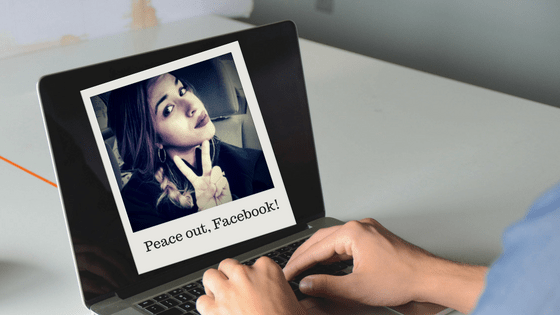
I Broke Up With Facebook Like, a Month Ago; We’re Just Friends Now.

It started off like any other relationship; at first, I loved Facebook, and Facebook loved me. I loved connecting with family and friends that were far away, sharing my thoughts, pictures, and adventure tales with all. But then, also like many relationships, it became toxic and destructive. All of the sudden there was drama everywhere, arguments that came out of the blue, and ultimately I was beginning to feel depressed anytime I was on Facebook – and much of the negativity was starting to rub off on me. The break-up phase slowly started with me just hitting the “hide post” button on statuses that I would find upsetting – which was great, because Facebook eventually got the hint that I didn’t want to see those kinds of things anymore, and so these statuses got to be fewer and fewer by the day. Then, it continued on with me clicking the “unfollow” button when I thought a connection was just… not my style. Finally, something made me decide that I really needed to break it off.

According to an article I read, addiction to technology is not a figure of speech – it’s an actual addiction. In fact, it talked about how in the midst of technology use, the brain of someone who is addicted to it looks just like that of a substance abuser. Other studies also show a strong correlation between the use of social media and depression, as well as anxiety and overall well-being. This addiction also affects your performance at work, your focus, and your personal relationships. After reading and relating to these findings, I thought it’d be a good idea to lay off the social media for a while (my only personal social media pages are Facebook and LinkedIn), and here’s what happened.

Week 1

The first week was tough; I still had to go on Facebook for work purposes – to post the company blogs I write, engage with the company Facebook page content, etc. – but I stayed off my news-feed and steered away from personal notifications. I was like an alcoholic working at a bar – working with the substance but not able to drink it. Still, I was determined. It became really tough when I went home, since I didn’t know what to do with my phone – most of what I used to do on my phone was browse through my Facebook news-feed. I found myself going back and forth on my phone, hitting my home button several times, locking and unlocking the screen for no reason, until eventually (after about 2 minutes of this behavior) I’d put the phone down and go do something else. I’d do this at least three times after I’d get home from work (and I have kids! O_O). That’s when I thought, “Wow, this really must be a problem.” So I was even more determined to stay off the ‘book.

Week 2

The second week was not much different than the first week. I was still struggling and fidgeting with my phone all the time, barely managing to stay off Facebook, but I observed a few things – some good, some bad. I noticed I was a little more agitated than usual; getting annoyed by the smallest things. Meanwhile, in the back of my mind, I’d find myself thinking of two to three-sentence summaries of what I could post on my status of whatever was currently annoying me – or, at other times, whatever was making me happy. Then it hit me: “could this be what withdrawal feels like? Oh my… I have a problem.” This realization gave me the motivation I needed to focus my attention on other things. I started to read more books (not just online articles), I was praying more, and I was being more productive around the home. Nothing crazy; I didn’t make a complete 180-degree behavioral change. However, I was making small, significant changes; noticeable changes. Still, although on the one hand I felt significantly less depressed, on the other hand I felt out of place and anxious because I couldn’t go on the site that I’ve been going on for years, on a daily basis.

Week 3

This was the week I noticed some of my habits changing. A prominent one was how I was obtaining information on current events – I became a little smarter in how I searched for news. If I saw a headline that read “Maria wore a red shirt on Wednesday, March 29th,” I’d recognize this as a news report. However, if I saw a headline that read “Maria wore a shirt on Wednesday which was a color that represented blood – does she want everyone in the world dead?” I’d recognize this as a formed opinion of the writer (and of course, we all know how many of these we see on social media). So, I learned to obtain more reliable information. Additionally, I was no longer checking my phone as soon as I woke up (thank God!) other than to just turn off my alarm. I also slowly became more involved with my husband and kids – I was playing more, I was aware of new things they were doing, etc. Although I did become a tad clingier with my husband, it was still good :).  I did respond to a message and maybe a few comments on my personal Facebook this week (outside of my blogs), but I was able to close it right up as soon as I did those couple of things – no news-feed, no picture posting (other than the ones I’ve been tagged on), and no status update; just off.

Week 4

This is the week where my anxiety was almost gone (I am currently on week five, almost six). I no longer felt like I was “missing something” because I wasn’t on Facebook. I actually met with friends in person, I was volunteering more, I was making new friends, and I was actually a part of society as opposed to just observing it. It felt (and feels) great! This was the week where I truly realized I don’t need social media. This time around I decided to give myself “permission” to go on Facebook – but I just didn’t really want to. I went on to see a cute little video my mother-in-law made of my son, I commented on it, loved it, and that was it. However, as much as I loved the positives of this break-up process, I also became aware of some negatives. Remember the part where I said I became a little clingier with the hubby? Yeah, well, by going through the “social media withdrawal” and the anxiety that came along with the process, I became a little more demanding, and found myself getting angry or upset expecting poor Patrick to substitute my need for social media with 24/7 of his attention to just me. I also found that I was very, very subtly substituting my Facebook addiction on my own with something else – I found a new shopping app that I started to spend up to 45 minutes on, even if I didn’t buy anything; I just needed something to look at. But, fear not! – it didn’t take long for me to recognize what was happening, and since then I’ve learned to do my best to stop this behavior as soon as I’m aware of it; I was back on track ;).

Results

Like with any toxic relationship, breaking up takes hard work and a lot of determination. The lingering ex will come knocking at your door (or your phone), begging for another chance or giving you the “sweet talk,” making you fall for it every so often. Then, once you’ve firmly decided to move on, you push through the crying nights, push through self-debates of whether you should go back or not, realizing after a long while that you’re finally over it – you could actually have a conversation with your ex and be OK.

Yeah, it was a little tough (still is) getting through the motions of detaching from social media, and I hit some road bumps along the way, but the benefits of setting yourself free are incredibly worth it! I can now go on Facebook without feeling the need to spend an hour on it or to go on it daily. Social media addiction is a bigger problem than you think, and it wasn’t until I decided to cut back that I realized just how bad it can be. After experiencing the rewards of staying off the screen, becoming more involved in my community and with my family, I can honestly say that I recommend this 100% to anyone who is willing to make a change for the better. It’s a bumpy ride, but it’s worth getting through it. So don’t be afraid of letting go; go ahead and unplug. I’m sure that after a break-up any loved one would tell you the same thing I told myself: “You deserve better – it’s time to get out there!” 😉 

computer20people20-20talia-3875-final_zpsynpbyivy

By Nayadee Wilson