Tag Archives: tips

How Communicating Rejection Notices Can Help Your Businesses’ Brand

Welcome back to another edition of the ComputerPeople Staffing blog! In the competitive job market, how companies handle candidate rejection notices can significantly impact how they are perceived by active candidates. Delivering bad news is never easy, but it’s a critical aspect of the hiring process that, when done with empathy and professionalism, can turn a potentially negative experience into a positive one. Here’s how companies can improve their rejection communication to better their brand.

1. Timeliness is Key

  • Why It Matters: Prolonged silence can lead to frustration and anxiety for candidates. Timely communication shows respect for their time and effort.
  • How to Implement: Set clear timelines for each stage of the hiring process and communicate them to candidates. Send rejection notices as soon as the decision is made, ideally within a few days of the interview.

2. Personalize the Message

  • Why It Matters: Generic rejection letters often can feel impersonal and dismissive. If your company has the bandwidth to send personalized rejection messages, it can add a human layer to the situation. Personalized messages show that you value the candidate’s application and recognize their effort.
  • How to Implement: Address the candidate by name. Reference specific aspects of their application or interview. Use a warm and empathetic tone rather than a cold, formal one.

3. Express Gratitude

  • Why It Matters: Thanking candidates for their time and effort reinforces a positive impression of your company, even in the face of rejection.
  • How to Implement: Acknowledge the time and effort they put into their application and interview. Express appreciation for their interest in your company and the position.

4. Encourage Future Interaction

  • Why It Matters: Leaving the door open for future opportunities can maintain a positive relationship and potentially attract the candidate to apply for other roles.
  • How to Implement: Invite them to apply for future positions that match their skills and experience. Encourage them to follow your company on social media or join your talent community for updates on new openings.

5. Be Transparent About the Hiring Process

  • Why It Matters: Transparency builds trust and helps candidates understand your decision-making process, reducing feelings of frustration or unfairness.
  • How to Implement: Explain the hiring process and criteria used for selection. Offer insights into the qualities and experiences that were prioritized for the role. Make it human, not artificial!

6. Train Your Team

  • Why It Matters: Ensuring that everyone involved in the hiring process understands the importance of compassionate rejection communication can standardize and improve the candidate experience.
  • How to Implement: Provide training on best practices for delivering rejection notices. Share examples of well-crafted rejection letters. Encourage team members to put themselves in the candidate’s shoes, as they were once candidates!

Communicating rejection notices with care is an essential part of the hiring process that can significantly impact your company’s brand. By being timely, personal, and constructive, you can leave a positive impression on candidates, even in rejection. This approach not only enhances your employer brand but also fosters goodwill and encourages top talent to consider your company for future opportunities.

Implementing these strategies demonstrates that your company values all candidates, not just those who are hired. By treating every candidate with respect and empathy, you contribute to a positive reputation that can attract high-quality candidates and set your company apart in the competitive job market.

_____________________________________________________________________________________________

Thanks for reading! If you are a business looking to fill your important IT roles, visit us at cpstaffing.com to learn more!

If you are a candidate and are looking for dream role, visit us at jobs.cpstaffing.com for our latest job postings!

And don’t forget to follow us on LinkedIn for new jobs, insights, blog posts and more! https://www.linkedin.com/company/computerpeoplestaffing

Written by Jeff Weiss

The Significance of Submitting Your Resignation Properly

Welcome back to another edition of the ComputerPeople Staffing blog! In the professional world, transitions are inevitable. Whether it’s a new job opportunity, a career change, or personal reasons, leaving a job is a common experience. One of the most important steps in this process is giving your employer a two-week notice. This standard practice is crucial for several reasons, and deviating from it—either by giving more or less notice—can have significant implications.

Why Two Weeks?

The two-week notice period has become a widely accepted norm in many industries, especially in the IT industry. It provides a balance between giving your employer enough time to find a replacement or redistribute your responsibilities, and allowing you to transition smoothly to your next chapter. Here are a few key reasons why this period is so important:

  • Professional Courtesy: Giving two weeks’ notice shows respect for your employer and colleagues. It acknowledges that your departure will have an impact and provides them with time to adjust.
  • Maintaining Relationships: The professional world is surprisingly small, especially in cities like Buffalo. Future opportunities often arise through networks and references. Leaving on good terms can preserve positive relationships that might benefit you later.
  • Smoother Transition: Two weeks gives both you and your employer time to ensure a smooth handover of your responsibilities. This can include training your replacement, completing ongoing projects, or documenting your tasks.
  • Protecting Your Reputation: Your professional reputation is one of your most valuable assets. Leaving abruptly or giving too much notice can negatively affect how future employers perceive you.

The Pitfalls of Giving Less Than Two Weeks’ Notice

While it might be tempting to leave immediately or give only a few days’ notice, doing so can have several negative consequences:

  • Burning Bridges: Leaving with short notice can frustrate and inconvenience your employer and colleagues, potentially damaging your professional relationships.
  • Legal and Contractual Obligations: Some employment contracts stipulate a notice period. Failing to comply can result in legal issues or loss of benefits.
  • Negative References: Employers may view a hasty departure as unprofessional, which can lead to unfavorable references that impact your future job prospects.
  • Unfinished Business: Leaving too soon might leave important projects incomplete or colleagues unprepared to take over your duties, reflecting poorly on your work ethic.

The Drawbacks of Giving More Than Two Weeks’ Notice

While more notice might seem courteous, it can also present challenges:

  • Awkward Work Environment: Knowing you’re leaving can create an uncomfortable atmosphere. Colleagues might treat you differently, and you might feel disconnected from ongoing work.
  • Productivity Decline: Employers might not assign new tasks to you, anticipating your departure. This can lead to a decline in productivity and job satisfaction.
  • Potential for Resentment: If your employer is unable to find a replacement quickly, a longer notice period can lead to frustration and resentment on both sides.

How to Give Your Two-Week Notice

When the time comes to resign, it’s important to do so professionally. Here are some steps to follow:

  • Write a Formal Letter: Draft a concise, polite resignation letter stating your intention to leave and your last working day. Express gratitude for the opportunity and experiences gained.
  • Speak to Your Supervisor/Manager: Schedule a meeting with your supervisor to deliver the news in person. This shows respect and allows for a direct conversation about the transition.
  • Be Prepared for Reactions: Your employer might try to persuade you to stay or express disappointment. Stay firm but respectful in your decision.
  • Offer Assistance: Show your commitment to a smooth transition by offering to help train your replacement or complete key projects before you leave.
  • Stay Professional: Continue to perform your duties to the best of your ability during the notice period. Leaving on a high note will reinforce your professional reputation.

In conclusion, giving a two-week notice is more than just a formality; it’s a crucial aspect of professional etiquette that benefits both you and your employer. By adhering to this practice, you demonstrate respect, protect your reputation, and ensure a smoother transition for everyone involved. Remember, the way you leave a job can be just as important as the way you start one. So, when the time comes, give your notice thoughtfully and professionally.

_____________________________________________________________________________________________

Thanks for reading! If you are a business looking to fill your important IT roles, visit us at cpstaffing.com to learn more!

If you are a candidate and are looking for dream role, visit us at jobs.cpstaffing.com for our latest job postings!

And don’t forget to follow us on LinkedIn for new jobs, insights, blog posts and more! https://www.linkedin.com/company/computerpeoplestaffing

Written by Jeff Weiss

The Importance of Proactive Succession Planning in Future-Proofing Your Company

Welcome back to another edition of the ComputerPeople Staffing blog! In today’s rapidly evolving business landscape, ensuring the long-term success and sustainability of your organization is more critical than ever. Succession planning is a key strategy to achieve this, providing a roadmap for the seamless transition of leadership and essential roles. It addresses fundamental questions such as who will be retiring, how to replace them, and the risks associated with not having a succession plan in place. Proactive succession planning is essential to future-proof your company against unforeseen challenges and maintain operational continuity.

The Need for Succession Planning

The demographic shifts, particularly the impending retirement of baby boomers, make succession planning a pressing concern. As a significant portion of the workforce approaches retirement age, companies face the risk of losing experienced and knowledgeable employees. Without a plan, the unexpected departure of key personnel can lead to substantial knowledge loss, decreased morale, and significant disruptions in business operations. Succession planning mitigates these risks by preparing the organization for seamless transitions.

Benefits of Proactive Succession Planning

A well-thought-out succession plan offers numerous benefits. It ensures smoother transitions and reduces downtime, maintaining business continuity. Proactive planning also improves employee engagement by fostering a culture of talent development and retention. Employees are more likely to stay with an organization that invests in their growth and provides clear career advancement opportunities. Succession planning also helps in identifying and nurturing future leaders, ensuring the organization remains competitive and resilient.

7 Factors to Consider in Succession Planning

Identifying Key Positions

Determine which roles are critical to the organization’s success and require succession planning. These positions often include senior leadership roles and other key operational roles that are vital to business continuity.

Assessing Talent

Evaluate the skills, experiences, and potential for advancement of current employees. This assessment helps in identifying individuals who are well-suited to take on larger responsibilities in the future.

Training and Development

Provide ongoing training and development opportunities to prepare potential successors for future roles. Investing in employee development ensures that they are ready to step into critical positions when needed.

Knowledge Transfer

Implement strategies for transferring critical knowledge from outgoing leaders to successors. This can include mentorship programs, documentation of processes, and shadowing opportunities.

Internal vs. External Succession

Consider whether to promote from within or recruit externally. Internal promotions can boost morale and retain institutional knowledge, while external hires can bring fresh perspectives and skills. Weigh the pros and cons of each approach to determine the best fit for your organization.

Timeline and Contingency Planning

Establish a timeline for succession planning activities and develop contingency plans for unexpected events. A clear timeline ensures that succession planning is proactive rather than reactive, and contingency plans provide a safety net for unforeseen circumstances.

The Cost of Not Investing in Succession Planning

Neglecting succession planning can lead to increased recruitment costs, decreased productivity, and the loss of institutional knowledge. Companies that fail to plan for leadership transitions often face operational disruptions and a decline in employee morale. Real-world examples abound of organizations that have suffered due to inadequate succession planning, underscoring the importance of being proactive.

4 Steps to Build an Effective Succession Plan

Start Early

Begin succession planning well in advance to allow sufficient time for talent development and transition. Early planning ensures that potential successors are adequately prepared for their future roles.

Engage Leadership

Gain buy-in from senior leadership and involve them in the succession planning process. Leadership support is crucial for the successful implementation of succession plans.

Communicate Transparently

Keep employees informed about succession planning initiatives and their role in the process. Transparent communication fosters trust and ensures that employees understand the importance of succession planning.

Monitor and Adjust

Continuously monitor the effectiveness of the succession plan and make adjustments as needed to adapt to changing circumstances. Regular reviews and updates ensure that the plan remains relevant and effective.

Conclusion

Proactive succession planning is vital for ensuring business continuity and long-term success. By starting early, engaging leadership, and communicating transparently, organizations can mitigate risks and prepare for the future. Don’t wait until it’s too late—begin your succession planning today to secure the future of your company!

If you need assistance with developing your succession plan, our IT staffing agency is here to help. Contact us to learn more about our services and how we can support you in creating an effective succession strategy tailored to your organization’s needs.

_____________________________________________________________________________________________

Thanks for reading! If you are a business looking to fill your important IT roles, visit us at cpstaffing.com to learn more!

If you are a candidate and are looking for dream role, visit us at jobs.cpstaffing.com for our latest job postings!

And don’t forget to follow us on LinkedIn for new jobs, insights, blog posts and more! https://www.linkedin.com/company/computerpeoplestaffing

Written by Jeff Weiss

Finding Your True Fit: 5 Signs You’re in the Right Workspace

Welcome back to another edition of the ComputerPeople Staffing blog! In today’s dynamic work landscape, finding the perfect workspace isn’t just about securing a job—it’s about finding the environment where you can truly thrive and be your authentic self. As professionals, we spend a significant portion of our lives at work, so it’s essential to ensure that we’re in the right place. In this blog, we’ll explore five key indicators that signify you’re in the ideal workspace where you can flourish personally and professionally!

Alignment with Company Values and Culture

Being in the right workspace means more than just having a job title; it means being part of a community that shares your values and beliefs. When your personal values align with those of your employer, you’ll feel a sense of belonging and purpose. Whether it’s a commitment to innovation, diversity, or social responsibility, working in an environment where you feel aligned with the company culture fosters a sense of fulfillment and satisfaction.

Opportunities for Growth and Development

In the right workspace, you’ll find many career-evolving opportunities for professional growth and development. Whether it’s through training workshops, shadowing colleagues, or challenging projects, your employer invests in your continuous learning and career advancement. Feeling supported in your professional journey not only boosts your confidence, but also keeps you motivated and engaged in your work.

Positive Relationships with Colleagues and Leadership

A supportive work environment is characterized by positive relationships with colleagues and leadership. When you’re in the right workspace, you’ll experience open communication, mutual respect, and collaboration among team members. You won’t feel afraid to ask questions, engage with colleagues or even lean into them when you experience something in your personal life, Additionally, effective leadership that values transparency and empowers employees contributes to a healthy work culture where everyone feels valued and heard.

Work-Life Balance and Well-being

A conducive workspace prioritizes employee well-being and promotes a healthy work-life balance. Whether it’s flexible work hours, remote work options, or wellness programs, your employer recognizes the importance of maintaining a harmonious equilibrium between work and personal life. Feeling supported in achieving this balance allows you to perform at your best while also nurturing your overall well-being.

Recognition and Appreciation

In the right workspace, your contributions are recognized and appreciated. Whether it’s a simple word of thanks, public acknowledgment, or rewards for outstanding performance, your employer values your efforts and celebrates your achievements. Feeling appreciated boosts morale, fosters a positive work environment, and reinforces your commitment to delivering excellence.

What to Do If You Are Not in the Ideal Workplace

Assess the Situation: Evaluate what aspects of the workspace are not ideal for you, whether it’s the environment, tasks, relationships, or other factors.

Communicate Constructively: Discuss your concerns with your supervisor or relevant colleagues in a respectful and constructive manner. Offer potential solutions or compromises to improve the situation.

If the situation doesn’t improve after communicating, Explore Opportunities: Keep an eye out for internal or external opportunities that align better with your career goals and values. Networking, updating your resume, and attending relevant events can help you explore new possibilities.

As we conclude, it’s essential to recognize that these five signs are just the beginning of what constitutes the right workspace. If you’re realizing that your current environment may not be the best fit for you, it’s vital to acknowledge these concerns and take proactive steps forward. Every company and business boasts its own distinctive attributes, and discovering those that resonate with your desires, requirements, and principles is paramount. Cultivating a positive atmosphere in the workplace not only nurtures growth and yields results but also paves the way for enduring success.

_____________________________________________________________________________________________

Thanks for reading! If you are a business looking to fill your important IT roles, visit us at cpstaffing.com to learn more!

If you are a candidate and are looking for dream role, visit us at jobs.cpstaffing.com for our latest job postings!

And don’t forget to follow us on LinkedIn for new jobs, insights, blog posts and more! https://www.linkedin.com/company/computerpeoplestaffing

Written by Jeff Weiss

Unleashing Success: The Power of Employer Brand

Welcome back to another edition of the ComputerPeople Staffing Blog! In today’s fast-paced and competitive business environment, attracting and retaining top talent is crucial for success. The journey to building high-performing teams begins with a compelling employer brand. As technology continues to shape our world, skilled IT professionals are not only in demand but have the luxury of choice. Hence, cultivating a positive employer brand becomes paramount for companies looking to find a competitive edge.  In this blog, we’ll explore the significance of employer brand in talent acquisition and retention, how companies can assess their brand, strategies to improve a negative brand, the crucial role of monitoring online reviews in shaping company culture and brand perception, and the impact of employer brand on bottom-line profits.

The Importance of Employer Brand

Imagine your employer brand as a beacon that guides talent to your doorstep. It’s not just about attracting applicants but drawing the right ones who align with your company culture, values, and mission. A strong employer brand not only entices candidates but also fosters loyalty among existing employees. It sets the stage for a fulfilling work environment where employees feel valued, engaged, comfortable and motivated to contribute their best.

“Focus on building the best possible business. If you are great, people will notice, and opportunities will appear.” – Mark Cuban, entrepreneur, venture capitalist, businessman

Identifying a Positive or Negative Brand

Assessing your employer brand involves listening to the pulse of your organization. Positive signs include high employee satisfaction, low turnover rates, positive online reviews, employee advocacy, and recognition in industry awards. Conversely, a negative brand may manifest through high turnover, negative reviews, low employee morale, and difficulty attracting top talent.

The Role of Monitoring Online Reviews

In today’s digital age, online platforms like Google and Glassdoor serve as windows into your company culture and employer brand. Current and potential employees often turn to these sites to gain insights and firsthand experiences from past and current employees. Monitoring online reviews provides invaluable feedback and insights into areas where opportunities for improvement lie. By taking proactive steps to address feedback and improve areas of concern, companies can not only enhance their employer brand but also attract and retain top talent. Moreover, encouraging satisfied employees to share their positive experiences can lead to a virtuous cycle of positive reviews and bolstered employer brand perception.

“Your brand is what people say about you when you are not in the room.” – Jeff Bezos, founder and CEO of Amazon

Strategies for Improving a Negative Brand

If your company finds itself with a negative employer brand, fear not. Every setback is an opportunity for growth and transformation. Start by actively listening to employee feedback, identifying pain points, and addressing them transparently. Cultivate a positive company culture that values diversity, fosters open communication, and prioritizes employee well-being. Invest in employee development programs, competitive compensation packages, and meaningful recognition initiatives. By demonstrating a genuine commitment to improvement, you can gradually rebuild trust and reshape your employer brand.

Impact on Bottom-Line Profits

The correlation between employer brand and bottom-line profits is undeniable. A positive employer brand attracts top talent, resulting in increased productivity, higher employee engagement, and lower turnover costs. Engaged employees are more likely to deliver exceptional customer service, leading to enhanced client satisfaction and retention. Ultimately, investing in your employer brand yields tangible returns in the form of enhanced profitability and sustainable growth.

“Your brand is the single most important investment you can make in your business.” – Steve Forbes, Editor in Chief of Forbes Magazine

In conclusion, the significance of employer brand cannot be overstated. It serves as a catalyst for attracting and retaining top talent, driving employee engagement, and ultimately impacting bottom-line profits. By nurturing a positive employer brand, companies can unlock a world of opportunities, foster a culture of excellence, and embark on a journey towards long-term success.

_____________________________________________________________________________________________

Thanks for reading! If you are a business in the Western New York Area and are looking to fill your important IT roles, visit us at cpstaffing.com to learn more!

If you are a candidate and are looking for dream role, visit us at jobs.cpstaffing.com for our latest job postings!

And don’t forget to follow us on LinkedIn for new jobs, insights, blog posts and more! https://www.linkedin.com/company/computerpeoplestaffing

Written by Jeff Weiss



Wellness In the Workplace

The end of summer is quickly approaching, kids are getting ready to go back to school, and you may be starting to evaluate your summer fitness progress (or lack there of). Eight hours at a desk five days a week can really take a toll, but at least over the summer, many people have highly active nights and weekends. As we all start to get ready to spend more time indoors, you may be wondering how you can make your workplace a healthy space to aid in your health goals. Read on to learn about our top three tips on how to have a guilt free workday.

Avoid the candy jar. We all know where the candy jar is located at work, and after a long morning, it can be difficult to avoid. A couple M&Ms may seem like no big deal, but they can add hundreds of unnecessary calories to your diet every day if you are not careful. If you are hungry or absolutely cannot go without that 3pm pick me up, try keeping natural sweets on your desk. Grapes, Cherries, or Apples work wonderfully!

Drink lots of water. Staying hydrated is good for pretty much everything. It provides energy, promotes weight loss, helps your skin, prevents headaches, and boosts your immune system, just to name a few benefits. Bring a water bottle to work, and make it your goal to fill it up three, four, or even five times throughout the day. You can also set an alarm if you need that extra reminder.

Walk and Stretch. Walking throughout the day is a great way to promote health and fitness in the workplace. Take a walk during breaks, long conference calls (if you have a headset), or even just every couple hours to reward yourself for finishing a task. It may seem like no big deal, but getting up and moving around can make a huge difference in staying energized. If you are unable to get up regularly, try stretching at your desk multiple times per day to get moving and get a mental break from work.

How have you had success staying healthy at work? Comment below!

Written by Kaitlyn Gahagen

Screenshot taken by Nayadee Wilson from YouTube.

Why You Should Listen to Ron Swanson

If you’ve never watched Parks and Recreation, let me tell you that you’re missing out on a major treat and should definitely put it on your watch list. Parks and Rec is a documentary style, political comedy about a group of local government employees (within the parks and recreation department) in the fictional town of Pawnee, Indiana. Some of the major characters in the show are Leslie Knope, a passionate and strong-minded woman who is determined to make Pawnee a better place, and Ron Swanson, a simple, straight-to-the-point libertarian who could care less for the government, yet is the director of the Parks and Rec department. Ron is one of my favorite characters because, 1. It’s impossible not to laugh with him, 2. Throughout the show he actually provides great, useful advice to basically everyone, and 3. His quotes are the best.

In episode 16 of season 4 (Sweet Sixteen), Leslie is trying to manage her campaign for city council while also handling her deputy director job in the Parks department. Ron keeps insisting that she take a leave of absence and focus on one thing at a time, but determined Leslie refuses to do so. Why am I writing about this? Well, because if I had a quarter for every time a job seeker said “I’m great at multitasking,” or every time an employer stated “We need a candidate with the ability to multitask,” I probably could have paid off my house by now. Episode 16 of Parks and Rec can teach all of us an often overlooked truth: multitasking isn’t all it’s cracked up to be; it’s actually not the “greatest” skill of all.

  1. Leslie had super powers. Which were fake.

    Leslie believes she can do it all. And, frankly, she’s usually very good at accomplishing what she wants. Nonetheless, during this episode, where she attempts to use her “I-am-Leslie-Knope” multitasking powers, she fails to see how they aren’t working when things begin to fall apart. As Ron begins to take notice, he immediately advises her to “take a sabbatical.” When Leslie ignores his advice, Ron decides to keep an eye on her while being amused by her mishaps, waiting for her to figure out on her own that she’s overworked.

    Like Leslie, most of us who pride ourselves on being great at multitasking believe that we can do it all. However, research shows that our productivity actually goes down by as much as 40%, and we get a lot less done. So, if you’re like Leslie and have tricked yourself into thinking you’re Superman or Superwoman, this serves to show that you should probably just listen to Ron Swanson.

  2. Leslie was in control. Of nothing; she was in control of nothing.
    .
    Leslie was so used to tackling a million things at once that this was a no biggie for her. She had been multitasking for so long that she was great at it, and had everything under control – except, she didn’t. While Leslie tries to manage her job and her campaign at the same time, she eventually loses control of her situations and mentally crashes (she ends up falling asleep during the surprise party that she was throwing for her coworker, Jerry). 

    The reality is that we don’t actually multitask, we just switch from one task to another – some can just do this quicker than others. When this happens, we become less competent in what we are trying to achieve – and the more we do it the worse it gets. “Practice makes perfect” doesn’t actually work in this case, no matter how badly we want to believe that it does. If you find yourself losing control while trying to do it all, then you should probably listen to Ron Swanson.
    .
  3. Leslie dropped the ball. More than once. More than twice.
    .
    In the episode of “Sweet Sixteen,” Leslie made mistakes. A lot of them. For example, Leslie is always very caring about her coworkers, and never misses their birthdays. But, this time she forgets Jerry’s birthday and attempts to throw him a belated “sweet 16” party (he’s 64, but his birthday is on February 29th so she reasons that he’s only had 16 actual birthdays). She then forgets to invite Jerry. She also forgets to pick up the cake. In the meantime, she realizes that they’ve also messed up her campaign signs, so she rushes back to the printer to have them fixed, and then replaces every single sign in Pawnee herself. They finally make it to the party sometime in the middle of the night, waking everyone up, and she then falls asleep on the couch, on top of Jerry. 

    What happened to Leslie is far from unusual; we actually suffer a fall in IQ when we become distracted by multiple things (which can be the same impact as losing a night of sleep). As it often seems to happen with most of us, while Leslie is usually on top of her game, everything came crashing down when she attempted to do it all – she should have just listened to Ron in the first place.

Listen To Ron Swanson

The next morning, Ron takes Leslie out by the lake and has a talk with her, finally convincing her to take a leave of absence. It was this sole moment in the entire episode that made me want to write about it, and it is one my favorite Ron Swanson quotes as of yet (depending on what else he says – I’ve recently discovered this show, so I’m a little behind). Like many of Ron Swanson’s quotes, what he said to her was simple, to the point, and had a sense of eloquence. The reality is that when we give our attention and focus to one thing at a time, the results are usually ten times better than what they would be otherwise. So, the next time you’re in a multitasking nightmare, you should just take a deep breath, and listen to Ron Swanson: “Never half-butt two things. Whole-butt one thing.” Of course, his actual quote is slightly jazzier than how I put it:

The-best-quotes-by-Ron-Swanson - from Thumbpress
For some of Ron’s funniest quotes, go here. And to tap into some Ron Swanson wisdom, check this out.

computer20people20-20talia-3875-final_zpsynpbyivy

By Nayadee Wilson

How to Win an Argument – Once and for All

Featured Image: Ways To Settle Arguments

So, lately I have witnessed my fair share of intense arguments, not only on my Facebook feed, but also on my LinkedIn, Twitter, as well as among my friends and family (I have actually partaken in some of these). It is no hidden fact that as a society we will have differences, which can result in conflict, but sometimes healthy debates are necessary and good in order for our society to function. I mean, could you imagine? A world where we all had the same thoughts, same likes, and same passions? Not sure about you, but to me, that sounds unpleasantly robotic. However, nowadays we see very few friendly debates; we mainly see full-blown arguments, with the sole intent of attaining victory and to change our opponent’s mind, as opposed to inform and simply listen to one another’s point of view. So, what is the fool-proof way of winning these arguments? That’s simple: avoid them – and here’s why.

  1. “You have a duty to speak up.” 

    I can see how the circumstances of unfairness and the human responsibility to look out for one another can send us into a down spiral “discussion.” However, the belief that we have a duty to always give our opinion is not true, and it is not what “speak up” means. When you start/enter into an argument in which your thoughts were not necessarily requested, it will only cause hostility. Doing this will not make your opponent like you; it will only make him/her strike back. I once saw a quote that said “instead of attacking what you hate, start promoting what you love,” and it truly stuck with me. If you truly want to speak up, start upholding and working towards what you believe in, and stay away from the unwanted, pull-your-hair-out arguments 🙂 .

  2. “You can prove them wrong.” 

    Yes, you can provide amazing facts, charts, examples, and use many other great tools all for the sake of proving your opponent wrong – but, at what cost? Although these things are great when used in friendly debates (those discussions that lead to information and communication rather than confrontation), it is counterproductive when used in a heated argument. Within the environment of an escalated dispute, proving someone “wrong” will not only insult your challenger’s intelligence, but it will also make that individual feel inferior, hurting whatever relationship you have (or could’ve had) with that person – even if the damage doesn’t show immediately. The take-away from this: always aim to simply inform and communicate, rather than using these great tools to humiliate and insult.

  3. “You win.” 

    Actually, you don’t. When you lose an argument, you lose. When you win an argument, you also lose. How? Because even though you will feel awesome, triumphant, and will want to tell your mom all about it, the other person does not. Their pride has been hurt, he/she feels degraded, their self-respect and judgment feel attacked, and most importantly: that person will just resent you for your great “win.” Oftentimes we believe that by proving someone wrong and proving ourselves to be right, we have won the person’s opinion in favor of ours. However, the truth is, as Dale Carnegie put it, “a man convinced against his will is of the same opinion still.” Winning an argument will never change anyone’s mind. What can change people’s minds, however, is your life example as to how you live by what you preach. This is not to say that you will never make mistakes; I have made plenty – yet it does not mean I have to advocate for the mistakes I’ve made. If you fall, pick yourself right back up; acknowledge and learn from your downfall. Doing so will not show that you’re a “hypocrite,” it will rather deepen your credibility and show your ability to correct yourself when you have failed.

I hope that by now you are as turned off from arguments as I am – it truly serves no good purpose! Of course, as I previously stated, friendly and informative debates/discussions are healthy, and needed for our society to function. Nevertheless, keep in mind that heated and escalated arguments are not debates; they fail to be properly informative (because the other person is not interested in listening), they do not serve the purpose of good communication, and they cause more harm than good. I am certainly not saying that I have not been caught up in these myself, especially when it comes to topics that I am passionate about, but slowly and steadily I am learning that this is not an effective way to have your voice be heard. Take the time to do some reading, keep yourself well-informed, and remember these words from Dale Carnegie:

Why prove to a man he is wrong? Is that going to make him like you? Why not let him save face? He didn’t ask for your opinion. He didn’t want it. Why argue with him? You can’t win an argument, because if you lose, you lose it; and if you win it, you lose it. Why? You will feel fine. But what about him? You have made him feel inferior, you hurt his pride, insult his intelligence, his judgment, and his self-respect, and he’ll resent your triumph. That will make him strike back, but it will never make him want to change his mind. A man convinced against his will is of the same opinion still.” – How to Win Friends and Influence People, by Dale Carnegie.

computer20people20-20talia-3875-final_zpsynpbyivy

By Nayadee Wilson

Is Your New-Year’s Resolution Useless?

As the new year approaches most of us have decided on, or are thinking about, a New Year’s resolution. Being carried away in my thoughts earlier today, it suddenly dawned on me: why do we have New Year’s resolutions, anyway? I mean, most of the time, let’s face it; we don’t exactly follow through. Time and time again I see myself, and others, fail miserably before the end of January to attain the infamous purpose that we had so excitedly set forth. Nevertheless, I did brainstorm a few reasons why having a New Year’s resolution is actually pretty beneficial, whether you’re able to achieve your goal or not.

  1. Everyone likes purpose.

    One thing that I know for sure is that having goals in life is essential for your overall wellbeing – it gives us a sense of purpose and meaning. Having goals, such as a New Year’s resolution, to work towards gives us the intrinsic motivation that otherwise we may not always find elsewhere. Although sometimes hard to achieve, and oftentimes we may fail to achieve the desired end result from these, we shouldn’t be too quick to overlook the inevitable impacts that come simply  as a side-effect of pursuing a goal. Whether your goal this year is to start a business, or to just be able to get out of bed before noon, goals are important no matter how big or small. 🙂

    Tip: if you’re having a hard time achieving your New Year’s resolution, try examining what your goals are. If you have too many of them, it can be overwhelming and will ultimately cause you lose focus on what should be your priority. Try listing all of your goals on paper, pick the top three that are most important, and focus solely on those instead. This will give you a greater chance of success.

  2. Adulting like a rock-star.

    What’s another great side-effect of setting goals? It forces you to be responsible. Of course, this will depend on how committed you are to your goals. Nevertheless, it is a great way to make you feel like you are awesome at being an adult :). I personally miss the time when I was 7 years old and had no idea where money came from. I remember asking my mom: “Where do you get money? Is it like a building where you go and they just give it to you?” Good times… Then, of course, I came to a rude awakening when I found out that people don’t just “hand” you money. Point is, we don’t always like living the responsible adult life, yet when we have goals, being responsible becomes a little easier and more habitual.

    Tip #1: One way to spark the responsibility side-effect is to set a time line for your goals. Want to lose/gain 10 pounds? What’s a reasonable timeline for accomplishing this? Or maybe you want to write a book; how many chapters or paragraphs would you like to have completed in a month? And so on, and so on.

    Tip #2
    :  Unless you’re incredibly disciplined, it may be hard to achieve your goal without some accountability. Find someone you trust to hold you accountable for your goals. This way, if you start to slack off, you’ll have someone to encourage you to keep going.

  3. More to come.

    Another awesome goal side-effect is that while we are pursuing goals we become hopeful. Hope is that thing that gives any human being motivation to do one thing: keep moving forward. Think about it; if you had no hope for anything lying ahead, what would be the point of doing anything towards your future? When you pursue your goals, you are being hopeful that you can achieve it, and a good result will come out of it – this is why you set it in motion in the first place.

    Tip #1: If you’re having a hard time having any hope of achieving your goals, what you might want to do is take some time to focus on the end result (although being careful not to dwell on it – remember that you also get lots of small victories in the process). If you can picture yourself at the end of it all, and remember why you wanted to do this in the first place, it can motivate you to keep working – one step at a time.

    Tip #2
    : To pick up on that first tip – take it one step at a time. Celebrate the small victories! So maybe you haven’t started your business yet, but perhaps you’ve made some great connections in the process. Or maybe you haven’t written a book, but you’ve written a few paragraphs and placed your heart on paper, letting yourself know you can do it – that’s a start!

  4. I can only get better.

    What else can we get out of having goals? We learn a lot about ourselves in the process. We learn what makes us tick, what doesn’t, what works for us, and what harms us. Anytime you take the initiative to work towards anything, it brings within itself an opportunity to learn. (For example, I have learned that no matter how hard I try or what I try, I am not a morning person… at all). No matter what the end result is, whether you succeed or fail, there is no doubt that you will learn things about yourself you might have not known before. And as you know – Knowledge is power!

    Tip
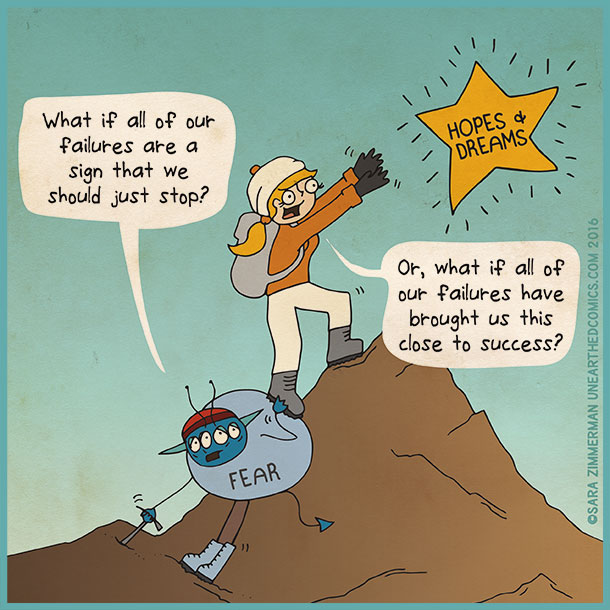
    : This will probably sound repetitive and cliché, but it is so true. If you’ve failed at achieving your goal, this failure is simply a lesson to be learned. When you fail, you learn about the things that did not work for you. Use this knowledge to improve yourself rather than to self-criticize.


  5. Time to straighten up.

    Lastly, as Jim Rohn put it, “Discipline is the bridge between goals and accomplishment.” When you are committed to your goals, the inevitable happens: self-discipline. A “goal” is something you have not achieved before, that you are willing to work towards; a desired result in your life. Working towards your goals will require you to do things that you may have never done before, forcing you to create new habits and commit to these – and this is a great thing! When you create self-discipline, it is a trait that stays with you past the desired achieved (or failed) result. So, regardless of the outcome, remember that the process of this very same pursuit will only benefit you in the end.

    Tip: If at first you don’t succeed, you can dust it off and try again! Don’t forget that there is always next year. 🙂

*All images/comics used in this blog were obtained from Unearthed Comics*

computer20people20-20talia-3875-final_zpsynpbyivy

By Nayadee Wilson

Getting Your Mojo Back After The Holidays

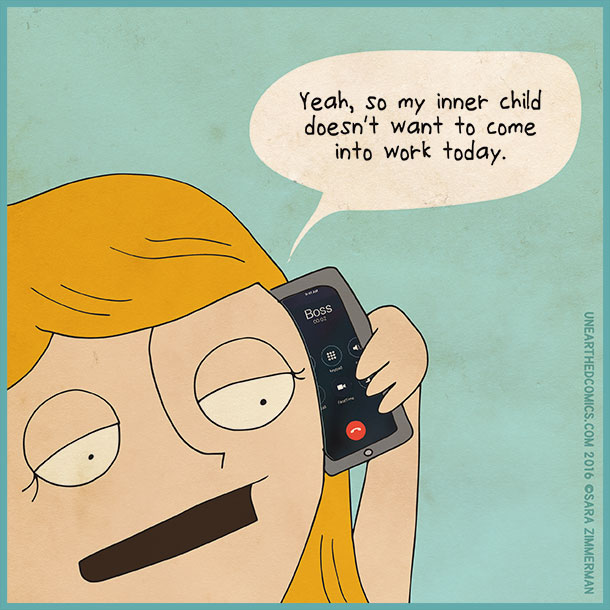
Even as I write this I am struggling to keep my focus and motivation. What others would call “writer’s block,” I am calling procrastination. To be fair, I believe that this is simply the effect from a cause that we all know too well: the “After-Holiday Blues” (I think I just made that name up, but you get my drift). There is no doubt that returning to work after the freedom of the holidays is hard; the heavy thought of “I don’t feel like going to work today” fills our mind like an ugly plague. To get out of the wishing-for-a-never-ending-holiday stage, here are some ideas that may help in getting your mojo back and start up some motivation.

Music heals all.

One thing you may want to try is playing some cheery music (quietly, if allowed) while you’re working. Music has the amazing effect of altering the way we feel. Playing music while you work will make you feel happier, and in turn, more productive and motivated to work. I, for example, like to listen to talk shows while I work – not necessarily “music,” I know, but it is something that soothes me and makes me feel good. When I don’t have my talk shows on, I love to listen to upbeat songs and have my own little party – you could do the same 🙂 . Additionally, if you wanted to keep the holiday season going in your own way, go ahead and play songs like “Sleigh Ride” (one of my favorites) over and over until you’re satisfied – whatever makes you happy! Whether cheery music means sad country songs or super upbeat Christmas songs, choose whatever works for you; get working while enjoying the beat.

Something nice to have.

I am always like a little kid on a sugar rush any time I have anything new – it could be something as simple as a nice pen (I do love nice pens *_*). If you’ve received something nice during the holidays and you can bring it to work, go ahead and take that with you. Having something nice to look at, especially something you really enjoy, will make you feel more at home and boost your mood. I’d recommend even getting some nice office supplies of your own (or something related to the job that you do) so that you’re motivated to use it. New things are always exciting! These can range from really cool mouse pads, to awesome pens, a fancy calculator, or even just a plant for your desk or a new picture for your screen background. Today, for me, my nice thing to have was a really nice sweater that I got over the holidays. I feel pretty and uplifted, and that is what counts! 🙂 Of course, not everyone has the same likes/dislikes, just make sure that you find something that makes you feel inspired and bring it with you – whatever that may be.

There is always a first step.

This blog is a prime example of the power of this tip. I was not initially motivated to start this, but without thinking I just opened up Word Document and started writing – now here we have a blog. Every job or task that you have needs to start somewhere, and all you have to do is take that first step. Chances are that once you get started on your task, you will gain momentum and follow through with the project; even if it is just for that day (then you have to take that first step again, the next day). Usually the first step is always the hardest to take, but, in most cases, it will always be the most simple. You will quickly find that just a few minutes after taking that step, you’ve actually already made some great progress. 🙂

We can be merry all year round.

I know there are times in which we all wish for longer breaks, but what fun would that be? After all, our breaks serve as great satisfaction after a job well done. Although some may be wishing for the holiday season to just be over with, most of us can agree that, even so, coming back to work can be mentally challenging. At least now you know that there is no need to fret, and you can easily get your groove back in the workplace. Just because the holiday season is over doesn’t mean that you can’t carry it on in your own way, if you wanted to. For this New Year, remember to stay merry, and never stop showcasing the best of your talents – that is what you are there to do!

computer20people20-20talia-3875-final_zpsynpbyivy

By Nayadee Wilson